
Forklift repairs must be made immediately if a safety defect is identified during required daily inspections, as operating a damaged machine violates OSHA regulations. Non-critical, proactive maintenance should be scheduled every 250–300 hours (or roughly every 6 weeks) to prevent major breakdowns, ensure safety, and minimize downtime.
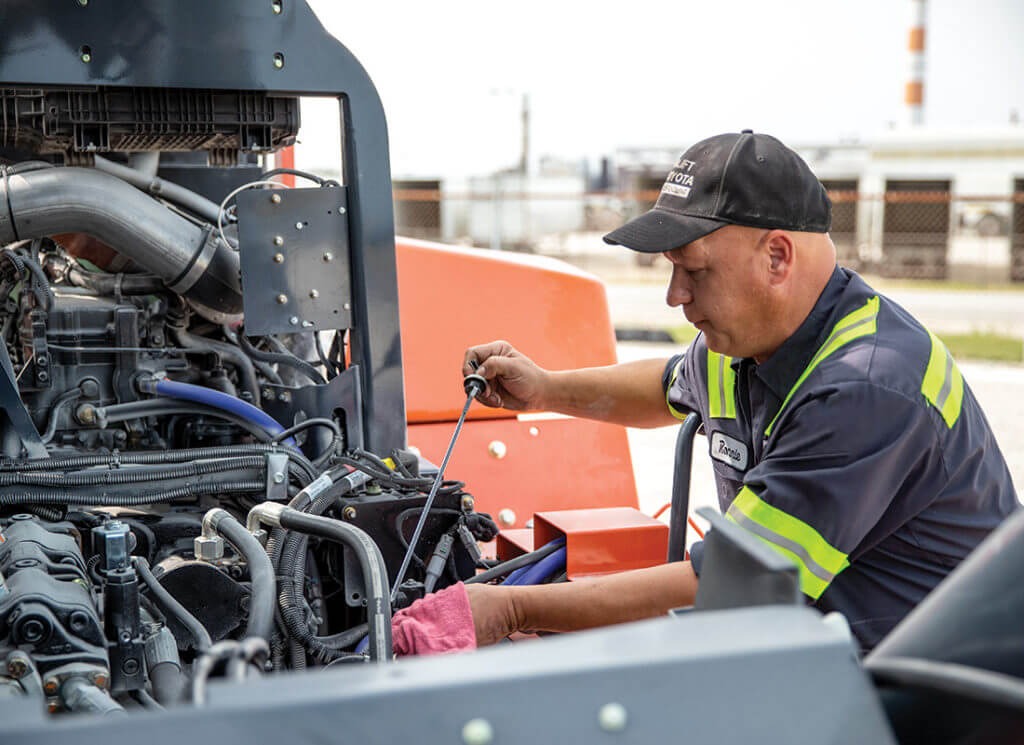
Why Immediate Repairs Are Non-Negotiable
OSHA standard 29 CFR 1910.178 requires operators to perform a daily pre-shift inspection before using any forklift. If a safety-related defect is found — such as faulty brakes, steering issues, damaged forks, leaking hydraulics, or worn tires — the machine must be taken out of service immediately. Continuing to operate a forklift with known safety defects is illegal and exposes the company to heavy fines, liability lawsuits, and potential criminal charges in the event of an accident. Immediate repairs protect operators, bystanders, and the entire facility from catastrophic failure.
Signs a Repair Is Needed Immediately
Train every operator to recognize these red-flag symptoms that demand instant action:
- Reduced Performance: A sudden 15–20% drop in lifting speed, slower acceleration, or difficulty holding loads at height signals hydraulic or mechanical problems.
- Warning Lights & Alarms: Any dashboard alert (check engine, low oil pressure, overheating, or battery fault) requires the forklift to be parked and inspected before further use.
- Visible Leaks or Smoke: Hydraulic fluid, engine oil, or coolant leaks, excessive exhaust smoke, or unusual burning smells indicate serious issues that can lead to fire or loss of control.
- Strange Noises: Grinding, squealing, knocking, or clunking sounds from the mast, transmission, or wheels mean immediate shutdown.
- Tire or Wheel Damage: Flat spots, cuts deeper than 1 inch, or loose lug nuts compromise stability and braking.
Key Repair and Maintenance Timelines
Follow this proven schedule used by leading warehouses in 2026:
Daily – Pre-Shift Inspection (PMA)
Every operator must complete a documented walk-around inspection before the first use each day. This 5–10 minute check covers brakes, steering, forks, tires, lights, fluid levels, and safety devices. Any defect found results in immediate lock-out/tag-out until repaired.
Every 250–300 Hours (Approximately Every 6 Weeks)
This is the standard service interval for most propane, diesel, and electric forklifts. Technicians change engine oil and filters, inspect hydraulic systems, lubricate moving parts, check battery condition (for electrics), and perform a full safety audit. Completing this service on time prevents 80% of major breakdowns and keeps the forklift running at peak efficiency.
Annually or Every 2,000 Hours
A comprehensive professional inspection is required at least once per year or every 2,000 operating hours. This includes load testing, mast alignment, thorough brake and steering checks, and full documentation for insurance and OSHA compliance. Many companies schedule this during slow periods to minimize disruption.
How Would You Check If a Forklift Is Due to Be Serviced?
The easiest and most reliable method is to use the forklift’s hour meter (located on the dashboard). Compare the current reading against the last service sticker or digital maintenance log. Most manufacturers provide a service reminder sticker that lists the next due date or hour reading. Many modern fleets also use telematics systems that send automatic alerts to managers when service is approaching. If the hour meter shows 250+ hours since the last service or the sticker is missing/overdue, schedule maintenance immediately.
Benefits of Timely Repairs and Maintenance
Proactive service does far more than avoid breakdowns:
- Extends equipment life by 30–50%
- Reduces operating costs through better fuel efficiency and fewer emergency repairs
- Maintains maximum lifting capacity and productivity
- Protects against OSHA fines and insurance claim denials
- Improves operator safety and morale
Conclusion
Forklift repairs must happen immediately when safety defects are discovered during daily inspections. Non-critical maintenance should follow a strict schedule of every 250–300 hours (roughly every 6 weeks) and a full professional inspection annually or at 2,000 hours. Following these timelines prevents costly downtime, keeps operators safe, and ensures compliance with OSHA regulations. A well-maintained fleet is more productive, more reliable, and far less expensive over the long term.
 English
  French
  Spanish
  Vietnamese
  Thai
Thai  Italian
  Arabic
  Malay
Malay  Portuguese
  German
  Russian
  Japanese
  Korean
  Lao
Lao  Indonesian
  Turkish
  Irish
Irish  Uzbek
Uzbek