
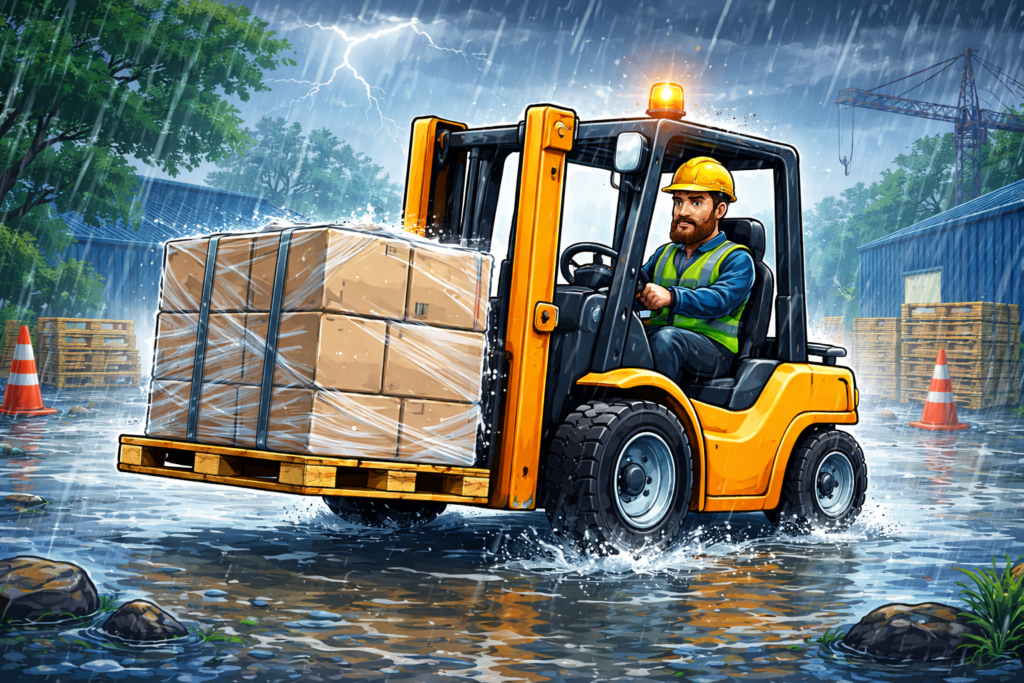
Many modern electric forklifts can be used in the rain, provided they have a sufficient IP (Ingress Protection) rating, typically IPX4 or higher. While they can handle light to moderate rain, they are not designed for, and should not be used in, heavy downpours or submerged in deep puddles.
Understanding IP Ratings for Electric Forklifts
IP ratings tell you exactly how much protection a forklift has against water and dust. IPX4 means the machine can withstand water splashing from any direction — enough for light rain or occasional drizzles. Many 2026 Yale, Toyota, Crown, and Mitsubishi electric models carry IPX4 or IPX5 ratings on motors, controllers, and electrical enclosures. Higher-rated units (IPX6 or IPX7) are available for truly outdoor work, but they cost more and are less common in standard warehouse fleets. Always check the manufacturer’s specification plate or operator manual before taking any electric forklift outside in wet weather.
Key Considerations for Rainy Conditions
Check the Rating
Before operating in rain, confirm your forklift’s IP rating. Indoor-only models (common IPX0 or IPX1) should stay dry. Most modern electric forklifts sold for mixed indoor/outdoor use carry at least IPX4 protection on critical components. If the rating is unknown, assume it is not safe for rain and keep it inside.
Operating Precautions
In light rain, keep speed low, avoid deep puddles, and drive with extra caution on slippery surfaces. Reduce load capacity slightly because wet floors reduce traction. Use the horn more frequently and watch for pedestrians. Never raise the forks high while moving in wet conditions — a sudden stop could cause the load to shift.
Avoid Deep Water
Never drive through puddles deeper than a few inches. Water can enter electrical compartments, short-circuit the battery, or damage the motor controller. Even IPX4-rated forklifts are not waterproof and can suffer expensive damage if submerged.
Post-Use Maintenance
After operating in rain, park the forklift indoors, let it dry completely, and inspect for water ingress. Wipe down the mast, carriage, and electrical connections. Check the battery compartment for moisture. Many fleets perform an extra visual inspection and test all functions after wet-weather use to catch problems early.
Components
Modern electric forklifts protect sensitive parts with sealed motors, waterproof connectors, and elevated battery compartments. Still, the display screen, wiring harnesses, and charger port remain vulnerable. Regular maintenance keeps these seals effective.
Not All Electric Forklifts Are Designed for Wet Weather
Pure indoor models (many 3-wheel electrics) have minimal water protection and should never be used outside in rain. Outdoor-rated electric forklifts usually have pneumatic tires, higher ground clearance, and better sealing. Always verify the intended environment in the manufacturer’s literature.
Can an Electric Forklift Get Wet?
Light rain is acceptable on properly rated machines, but “getting wet” means avoiding standing water, heavy downpours, or pressure washing. Brief exposure to drizzle will not harm a modern IPX4+ electric forklift, but prolonged heavy rain or driving through puddles can cause expensive electrical failures. When in doubt, keep the machine dry.
What Type of Forklift Is Best for Outdoor Use?
For reliable outdoor performance in rain or rough conditions, choose diesel or LPG-powered forklifts with pneumatic tires and high ground clearance. They handle water, mud, and uneven surfaces far better than most electric models. If you prefer electric for emissions reasons, select a purpose-built outdoor electric forklift with IPX5+ rating, higher ground clearance, and all-weather tires. Many fleets use a mix: electric units indoors and propane or diesel units for outdoor or mixed environments.
Conclusion
Many modern electric forklifts can safely operate in light to moderate rain if they carry an IPX4 or higher rating. However, they are not designed for heavy downpours or deep water, and indoor-only models should stay dry. Always check the manufacturer’s specifications, drive cautiously in wet conditions, and perform extra maintenance afterward. For the best results in mixed or outdoor environments, consider weatherproof electric models or traditional internal-combustion forklifts. Proper selection and care keep your equipment running safely and productively regardless of the weather.