
An unloaded forklift can be unstable because its center of gravity shifts rearward, increasing the risk of tipping during turns, braking, or slope travel.
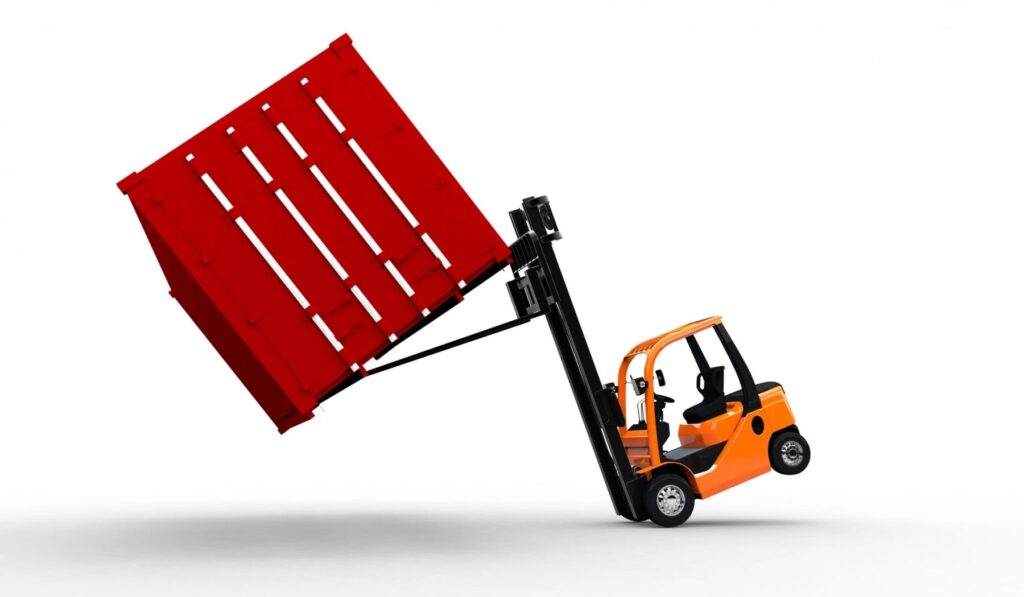
Many people assume that a forklift is safest when it is empty. After all, without a heavy pallet on the forks, the machine seems lighter, easier to drive, and less dangerous. In reality, an unloaded forklift can sometimes be surprisingly unstable. This is because forklifts are not balanced like ordinary vehicles. They are designed around a counterweight system, a stability triangle, and a combined center of gravity that changes depending on whether the truck is carrying a load.
Understanding why an empty forklift can become unstable is essential for warehouse operators, fleet managers, safety trainers, and anyone working around material handling equipment. Whether you operate a small electric pallet truck, a warehouse forklift, or a large counterbalance truck, the same safety principle applies: forklift stability depends on the relationship between weight, speed, steering, slope, and center of gravity.
Why Is an Unloaded Forklift Sometimes Unstable?
An unloaded forklift is often unstable because its center of gravity shifts too far toward the rear of the machine, where the heavy counterweight is located. In a counterbalance forklift, the rear counterweight is designed to offset the weight of the load carried at the front. When a forklift lifts a pallet, the load and the counterweight work together to create a combined center of gravity. If this combined center of gravity stays inside the forklift’s stability triangle, the truck remains stable.
However, when the forklift is empty, there is no load on the forks to help balance the rear counterweight. As a result, the center of gravity moves closer to the rear axle. This can make the forklift more sensitive during braking, acceleration, turning, or driving on ramps. In certain conditions, the forklift may become rear-heavy, lose front traction, or even tip backward or sideways.
This is why forklift operators should never assume that an unloaded truck is automatically safe. Empty forklifts still require careful handling, correct speed control, proper travel direction on slopes, and awareness of the machine’s stability limits.
The Role of the Forklift Stability Triangle
To understand forklift instability, it is important to understand the stability triangle. A typical counterbalance forklift has three main support points: the two front wheels and the pivot point of the rear axle. If you connect these three points, they form a triangle. This is known as the forklift stability triangle.
For the forklift to remain stable, the combined center of gravity must stay within this triangle. When the forklift is carrying a properly positioned load, the combined center of gravity usually moves forward but remains inside the triangle. When the forklift is unloaded, the center of gravity shifts backward toward the counterweight and rear axle. This leaves less room for error, especially when the forklift is moving.
If the center of gravity moves outside the stability triangle, the forklift can tip. If it moves beyond the front edge, the forklift may tip forward. If it moves outside the side edges, the forklift may tip sideways. If it shifts too far toward the rear under certain operating conditions, the forklift may become rear unstable.
Rear-Heavy Balance and Backward Tip Risk
Counterbalance forklifts are built with heavy rear counterweights. This counterweight is necessary because the forklift must lift loads in front of the front axle. Without a counterweight, the truck would tip forward whenever it lifted a heavy pallet.
When the forklift is unloaded, however, the counterweight becomes the dominant weight on the machine. This can create a rear-heavy balance. During quick acceleration, sudden braking, or travel on uneven ground, the forklift’s weight can shift in a way that makes the machine less predictable.
On slopes, the risk becomes even greater. If an unloaded forklift travels incorrectly on an incline, the rear-heavy design can cause the center of gravity to move closer to the edge of the stability triangle. This is why operators must follow the correct travel orientation when driving empty forklifts on ramps. In many situations, an unloaded forklift should travel down a slope with the forks pointing downgrade, or backward relative to the direction of travel, depending on the specific forklift type and safety instructions. The goal is always to keep the center of gravity inside the stable area.
Reduced Front Wheel Traction
Another reason an unloaded forklift can become unstable is reduced front traction. In a counterbalance forklift, the front wheels often carry much of the working load, especially when the forklift is lifting and transporting pallets. When the forks are empty, less weight is placed on the front axle.
This reduction in front axle weight can affect traction, braking, and steering response. If the forklift accelerates quickly, brakes sharply, or turns on a dusty, wet, oily, or uneven floor, the front wheels may not grip as effectively. Reduced traction can make the forklift harder to control and increase the risk of skidding or sliding.
In warehouses, this problem may be worse in areas with polished concrete, loose packaging material, dock plates, ramps, or outdoor surfaces. Operators should slow down, avoid sudden movements, and keep the forks low while traveling. Even when the forklift is empty, safe driving habits are essential.
Lateral Instability During Turns
Side tipovers are among the most dangerous forklift accidents. An unloaded forklift can still tip sideways if the operator turns too quickly, especially at higher speeds. This is called lateral instability.
Forklifts are different from cars because they are narrow, tall, and often steer from the rear wheels. Rear-wheel steering gives forklifts excellent maneuverability in tight warehouse aisles, but it also means the rear of the truck swings outward during turns. If the operator turns sharply or travels too fast around a corner, the center of gravity can shift toward the outside of the stability triangle.
Once the center of gravity moves beyond the side boundary of the triangle, the forklift can tip over. This can happen whether the forklift is loaded or unloaded. However, when the forklift is empty and rear-heavy, sudden steering movements can feel especially unstable because the counterweight adds significant mass behind the operator.
To reduce lateral instability, operators should slow down before turning, avoid sharp steering inputs, keep the forks close to the ground, and never turn on ramps unless absolutely necessary and allowed by site procedures.
What Factors Cause a Forklift to Become Unstable?
Several factors can cause a forklift to become unstable. The first factor is load weight. A load that exceeds the forklift’s rated capacity can move the center of gravity outside the stability triangle and cause a forward tipover. Operators should always check the forklift data plate and never exceed the rated capacity.
The second factor is load position. Even if a load is within the rated weight limit, it can still be dangerous if it is positioned too far forward, unevenly distributed, or not secured properly. A long load or high load center increases leverage on the forklift and reduces stability.
The third factor is lift height. A raised load increases the forklift’s overall center of gravity. The higher the forks are raised, the more unstable the truck becomes. This is why operators should travel with the forks low, usually just high enough to clear the floor.
The fourth factor is speed. Driving too fast reduces the operator’s ability to react and increases the force generated during turning or braking. Speed is especially dangerous when combined with sharp turns, ramps, rough surfaces, or narrow aisles.
The fifth factor is turning behavior. Sudden turns can quickly push the center of gravity outside the stability triangle. Operators should slow before corners, steer smoothly, and avoid sudden directional changes.
The sixth factor is braking and acceleration. Harsh braking can shift weight forward, while sudden acceleration can shift weight backward. Both actions can affect stability, especially when the forklift is empty, traveling on an incline, or carrying a raised load.
The seventh factor is ground condition. Wet floors, loose gravel, potholes, uneven dock plates, debris, and damaged pavement can all reduce stability. Even a small surface change can affect a forklift’s balance when the machine is turning or traveling with speed.
The eighth factor is slope travel. Ramps and inclines change the relationship between gravity and the forklift’s center of mass. Operators must use the correct direction of travel, keep loads uphill where required, and avoid turning on slopes.
The ninth factor is attachment use. Fork extensions, clamps, rotators, side shifters, and other attachments can change the forklift’s capacity and center of gravity. Any attachment should be approved for the forklift and reflected on the capacity data plate.
The tenth factor is operator behavior. In many forklift incidents, instability is not caused by one issue alone but by a combination of poor speed control, sharp steering, incorrect load handling, and lack of awareness. Proper training, supervision, and safe operating procedures are critical.
How to Improve Forklift Stability
To improve forklift stability, operators should always drive with the forks low, maintain a safe speed, avoid sudden turns, and follow proper ramp procedures. Loads should be stable, centered, and tilted back when transported. Operators should also inspect tires, brakes, steering, mast components, and hydraulic systems before use.
Fleet managers can improve safety by choosing reliable equipment from trusted material handling suppliers such as Liftron. The right forklift, proper maintenance, suitable tires, and correct operator training all contribute to safer handling and better warehouse productivity.
Workplaces should also mark travel lanes, keep floors clean, repair damaged surfaces, post ramp safety signs, and ensure operators understand the forklift stability triangle. A forklift is powerful and useful, but it must be operated with respect for its design limits.
Conclusión
An unloaded forklift can be unstable because its center of gravity shifts toward the rear counterweight. Without a load on the forks, the machine may have reduced front traction, a rear-heavy balance, and less margin for error during braking, turning, acceleration, or slope travel. Forklift instability can also be caused by excessive speed, raised loads, uneven ground, poor load placement, sharp turns, incorrect ramp operation, and improper use of attachments.
 English
  French
  Spanish
  Vietnamese
  Thai
Thai  Italian
  Arabic
  Malay
Malay  Portuguese
  German
  Russian
  Japanese
  Korean
  Lao
Lao  Indonesian
  Turkish
  Irish
Irish  Uzbek
Uzbek