
The capacity of a forklift can be found on the data plate, which lists safe lifting limits, load centers, and key truck details.
The capacity of a dorchla-ardaitheoir can readily be found on the data plate, also called the nameplate, capacity plate, or data tag. This plate is usually a metal plate or durable sticker attached to the forklift in a place where the operator can see it. Common locations include the dashboard, operator console, mast area, side of the operator compartment, near the seat, or sometimes on the overhead guard frame.
The forklift data plate is one of the most important safety references on the truck. It tells the operator how much weight the forklift can safely lift under specific conditions. It also provides key details such as the model, serial number, truck weight, fuel type or battery information, mast details, load center, lift height, attachment information, and rated capacity. OSHA’s powered industrial truck guidance explains that the nameplate provides important information, including forklift weight and capacity, and operators should read it to understand the truck’s capabilities and limitations. Source: OSHA powered industrial truck nameplate guidance.
Forklift capacity should never be guessed. Two forklifts may look similar but have different lifting limits because of mast height, counterweight, attachments, tires, battery weight, or load center rating. Reading the data plate before lifting helps prevent tip-overs, dropped loads, equipment damage, and serious workplace injuries.
Key Locations to Find the Forklift Data Plate
| Data Plate Location | Where to Look |
|---|---|
| Dashboard or Operator Console | Frequently placed near the instrument panel or controls so the driver can view it before operation. |
| Near the Operator Seat | Often found on the side panel, under or near the seat, or within the operator compartment. |
| Mast Structure | Some forklifts have the plate mounted on or near the mast area where operators can access it easily. |
| Overhead Guard | In some models, the data plate may be attached to the overhead guard or cage frame. |
| Inside the Operator Cabin | Enclosed-cab forklifts may place the data plate inside the cabin near the driver’s view. |
What Information Is on a Forklift Data Plate?
A forklift data plate usually contains more than one capacity number. This is important because forklift capacity changes depending on how the load is handled. A plate may show rated capacity at a specific load center and lift height. If either of those conditions changes, the actual safe capacity may also change.
Common data plate information includes manufacturer name, model number, serial number, truck weight, mast type, maximum lift height, tire type, fuel type or battery voltage, attachment details, load center, and rated capacity. The data plate may also include capacity charts showing how much the forklift can lift at different heights or load centers.
Operators should understand that the capacity number is not a general promise that the truck can lift that amount in every situation. A forklift rated for 5,000 pounds at a 24-inch load center may not safely lift 5,000 pounds if the load is longer, unbalanced, raised very high, or handled with an attachment that changes the center of gravity.
Why Capacity Is Not Just One Number
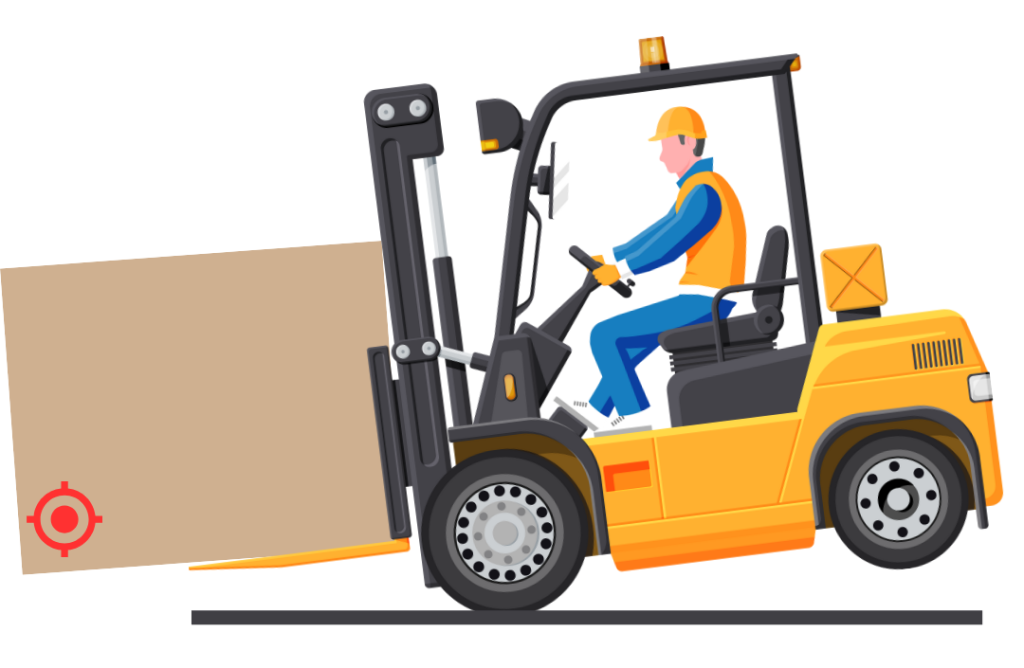
Forklift capacity depends heavily on load center. The load center is the horizontal distance from the face of the forks to the center of gravity of the load. Many standard forklift ratings are based on a 24-inch load center, which assumes a balanced 48-inch-long pallet. If the load is longer than standard, the center of gravity moves farther forward, reducing the forklift’s safe lifting capacity.
Lift height also matters. The higher the load is raised, the more stability becomes a concern. Some forklifts are rated to lift a certain weight at lower heights but less weight at higher elevations. This is especially important in warehouses with tall racking systems.
Attachments also change capacity. A clamp, rotator, fork positioner, side shifter, boom, or extended fork attachment can add weight and move the load center forward. When attachments are installed, the forklift should have an updated data plate showing the revised capacity. Operating with an attachment but relying on the original plate can be unsafe.
Important Notes for Operators
| Operator Note | Why It Matters |
|---|---|
| It Is Not Just One Number | Capacity can change based on load center, lift height, mast configuration, tire type, and attachments. |
| Check the Plate Regularly | Operators should verify the rated capacity before lifting, especially with heavy, tall, or unusual loads. |
| Do Not Operate Without a Plate | If the plate is missing, damaged, or unreadable, the forklift should not be used until corrected. |
| Match Attachments to the Plate | If an attachment is added, the data plate must reflect the new capacity and configuration. |
| Know the Load Weight | Operators must compare the load’s actual weight and load center with the data plate limits. |
What If the Data Plate Is Missing or Unreadable?
If the forklift data plate is missing, damaged, unreadable, or incorrect, the forklift should not be operated. The operator cannot safely confirm the truck’s rated capacity without accurate information. OSHA’s powered industrial truck standard, 29 CFR 1910.178, covers requirements for powered industrial trucks, and OSHA guidance emphasizes the importance of the nameplate for understanding vehicle capability and limitations.
A missing or unreadable data plate should be reported immediately to a supervisor or maintenance department. The employer, dealer, or manufacturer may need to provide a correct replacement plate. Operators should not write their own capacity numbers, guess based on a similar forklift, or rely on memory. Capacity information must be accurate for that specific truck and configuration.
How to Determine Forklift Fork Capacity
Fork capacity is related to, but not the same as, total forklift capacity. Forks have their own rating, usually stamped or marked on the fork shank. This marking may show fork capacity, load center, manufacturer, and fork dimensions. The forklift’s safe lifting ability is limited by the weakest rated component in the system.
To determine forklift fork capacity, inspect the fork markings first. Look on the side or shank of each fork for stamped information. If the marking is missing or unreadable, the forks should be inspected by a qualified person or replaced with properly rated forks.
Next, compare the fork rating with the forklift data plate. Even if the forks are rated for a high load, the forklift itself may have a lower rated capacity. Likewise, if the forklift is rated for a certain load but the forks are damaged, worn, bent, cracked, or underrated, the lift is not safe.
Fork condition matters. Forks should be checked for cracks, excessive wear, bent tips, uneven height, damaged hooks, worn heels, and missing locking pins. Fork wear reduces strength. If the fork heel is worn beyond acceptable limits, the fork may no longer safely support its original rating.
How Load Center Affects Fork Capacity
Fork ratings are also based on load center. A fork rated for a certain weight at a 24-inch load center may not safely carry that same weight if the load center is farther out. Long loads, uneven loads, or loads placed too far forward create more leverage on the forks and the forklift.
Operators should fully insert forks under the load whenever possible and keep the load centered. Lifting with only the fork tips is unsafe because it increases stress on the forks and shifts the load center forward. This can reduce stability and increase the chance of fork damage or tip-over.
Why Operators Must Check Capacity Before Every Lift
Forklift capacity is a daily safety issue. Loads may vary by weight, size, pallet condition, and balance. A load that looks manageable may be too heavy or have a long load center. If the forklift is overloaded, the rear wheels may become light, steering may be affected, braking distance may increase, and the truck may tip forward.
Operators should know the load weight before lifting. If the load weight is unknown, they should ask a supervisor, check shipping labels, review product documentation, or use a scale where available. Guessing is not a safe method.
Before lifting, compare the load weight, load center, lift height, and attachment use with the data plate. If the load exceeds the listed capacity, use a larger forklift, split the load, or choose another approved handling method.
Críoch
The capacity of a forklift can readily be found on the data plate, also known as the nameplate, capacity plate, or data tag. It is typically located near the dashboard, operator controls, seat area, mast, overhead guard, or inside the operator cabin. This plate provides essential information about safe lifting limits, load centers, lift heights, attachments, and truck specifications.
Operators should remember that forklift capacity is not just one number. It changes based on load center, lift height, attachments, fork condition, and truck configuration. Fork capacity should be checked by reading the markings on the forks and comparing them with the data plate. If the data plate is missing or unreadable, the forklift should not be used until a correct replacement is installed. Safe lifting starts with accurate capacity information and responsible operation.
 English
  French
  Spanish
  Vietnamese
  Thai
Thai  Italian
  Arabic
  Malay
Malay  Portuguese
  German
  Russian
  Japanese
  Korean
  Lao
Lao  Indonesian
  Turkish
  Irish
Irish  Uzbek
Uzbek