
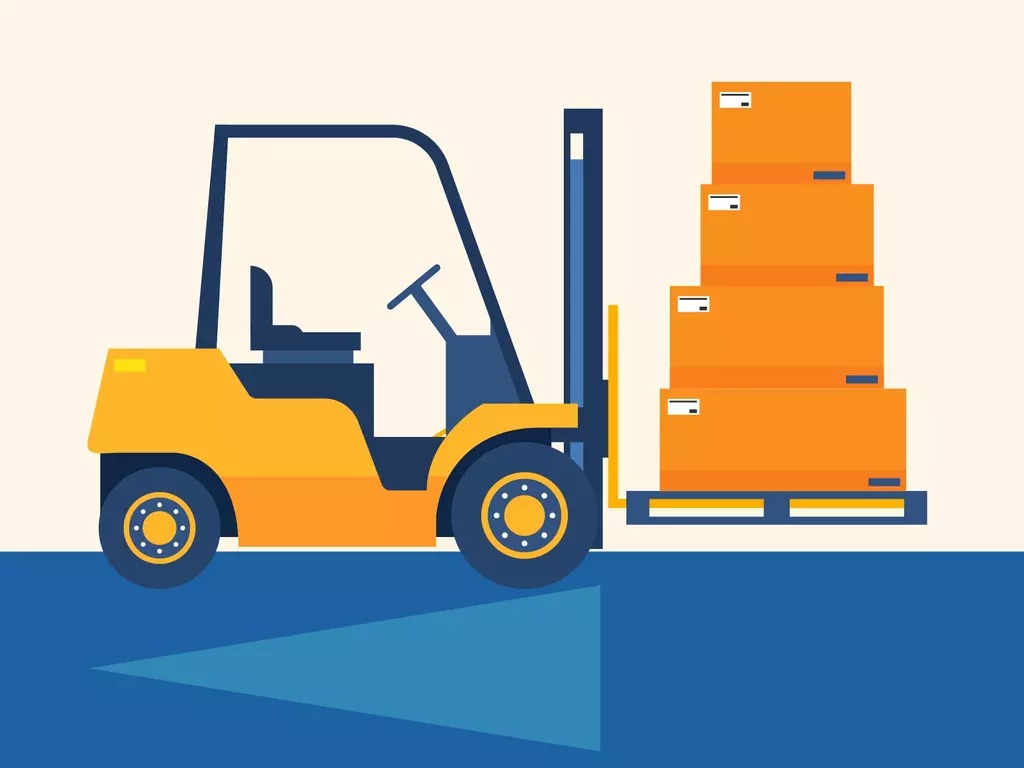
A forklift load should be carried as low as possible to maintain stability, with the tips of the forks typically 4 to 6 inches (10–15 cm) off the ground. The mast should be tilted back slightly to secure the load against the backrest. This simple rule is one of the most important safety practices for preventing tip-overs and ensuring smooth, controlled operation.
Why Load Height Is Critical for Forklift Safety
The height at which you carry a load directly affects the forklift’s stability. When forks are raised high, the center of gravity shifts upward and forward, making the machine far more likely to tip over — especially during turns, sudden stops, or on uneven surfaces. OSHA and forklift manufacturers emphasize keeping loads low as the primary defense against accidents. A low load position keeps the combined center of gravity low and centered, giving the forklift better balance and control.
OSHA Requirements for Load Height
OSHA standard 29 CFR 1910.178 does not specify an exact inch measurement but requires operators to carry loads “as low as possible” while maintaining full control. Industry best practices and manufacturer guidelines consistently recommend keeping the fork tips 4 to 6 inches off the ground during travel. The mast should be tilted back just enough to cradle the load securely against the backrest without dragging or creating excessive forward pressure. These practices are taught in every OSHA-compliant forklift training program and are frequently checked during safety audits.
Recommended Load Height and Mast Position
For safe travel, raise the forks only high enough to clear obstacles — typically 4 to 6 inches. Once the load is lifted, tilt the mast back slightly so the load rests firmly against the carriage backrest. This position prevents the load from shifting forward during stops or turns. Never travel with forks raised higher than necessary, and never tilt the mast forward while moving. On ramps, always keep the load facing uphill when going up and downhill when going down, with forks low and tilted back.
How to Safely Pick Up and Transport a Load
Approach the load squarely with forks level and spaced correctly for the pallet. Tilt the mast forward slightly to insert the forks fully, then tilt back before lifting. Raise the load just enough to clear the ground (4–6 inches), then tilt the mast back again. Keep your eyes focused in the direction of travel and drive at a safe speed. Slow down for turns and avoid sudden stops. When setting the load down, tilt the mast forward only after the forklift is completely stopped and positioned correctly.
Common Mistakes That Lead to Accidents
Many forklift incidents occur because operators carry loads too high. Common errors include:
- Driving with forks raised high to “see better”
- Tilting the mast forward while traveling
- Taking turns too quickly with an elevated load
- Carrying unbalanced or unstable loads at any height
Each of these mistakes shifts the center of gravity and dramatically increases tip-over risk. Training and constant awareness are essential to avoid these dangerous habits.
Special Situations and Extra Precautions
On ramps, always travel with the load facing uphill when ascending and downhill when descending. Keep forks low and mast tilted back. Never turn on a ramp. In narrow aisles or congested areas, reduce speed and maintain extra caution. When visibility is limited by the load, use a spotter and drive in reverse if necessary, always looking in the direction of travel.
How to Slow Down a Stand-Up Forklift?
To slow down safely, gradually release the accelerator and allow the forklift’s natural braking system (including regenerative braking on electric models) to reduce speed smoothly. For quicker stops, use the service brake gently. Never slam the controls or make sudden movements with a raised load.
Should You Jump Clear of a Stand-Up Forklift If It Starts to Tip?
No. OSHA and manufacturer guidelines are clear: if a forklift begins to tip, stay in the operator compartment, hold on tightly, and lean in the opposite direction of the fall. Jumping out greatly increases the chance of being crushed or struck by the falling machine. The overhead guard and operator compartment are designed to protect you when you remain inside.
Conclusion
Carrying a load as low as possible — with forks 4 to 6 inches off the ground and the mast tilted back — is the single most important rule for safe forklift operation. This simple practice dramatically reduces the risk of tip-overs and helps maintain full control at all times. By following OSHA guidelines, manufacturer recommendations, and consistent safe habits, you can protect yourself, your coworkers, and your equipment every day.