
To drive a stand-up forklift, enter facing forward using three-point contact, place your foot on the “dead man” pedal, and use the joystick/control handle for steering and direction. Keep forks 2–4 inches off the ground, tilted back, and drive slowly. Always look in the direction of travel, particularly in reverse. Mastering these steps ensures safe and efficient operation.
Why Proper Training Matters for Stand-Up Forklifts
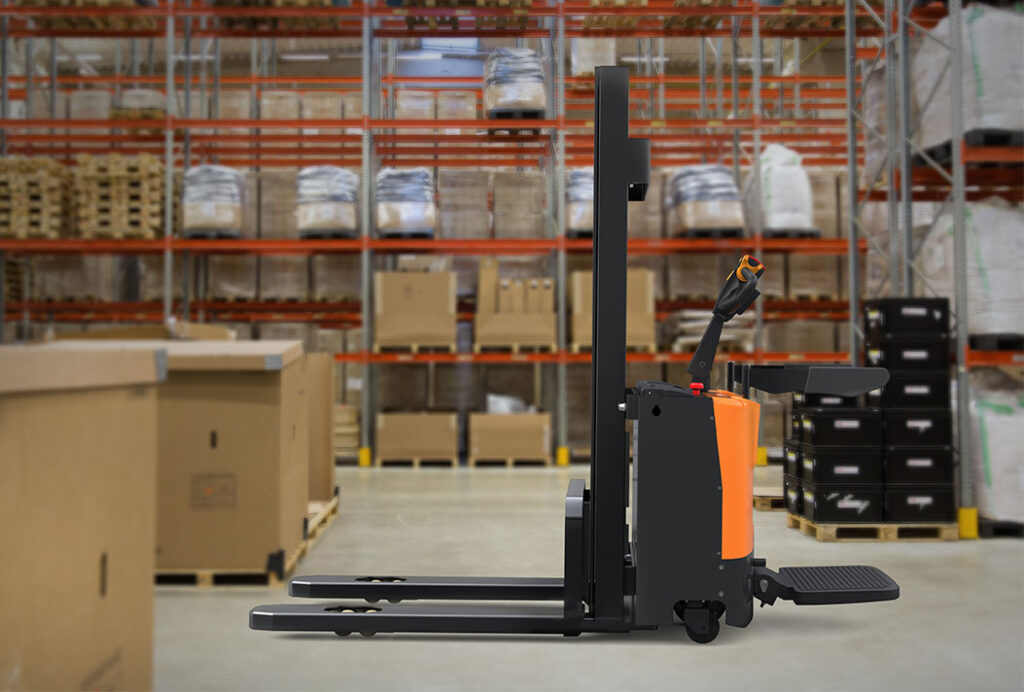
Stand-up forklifts (also known as stand-on or rider trucks) are widely used in warehouses, distribution centers, and manufacturing facilities because they are compact and highly maneuverable in tight spaces. However, their unique design — where the operator stands rather than sits — requires specific techniques and heightened awareness. Incorrect operation can lead to tip-overs, dropped loads, or serious injuries. This guide provides clear, step-by-step instructions based on current OSHA and industry best practices for 2026.
Pre-Operation Safety Inspection
Before driving any stand-up forklift, perform a thorough pre-shift inspection. Check the battery charge level, inspect forks for cracks or bends, test the horn, lights, and brakes, and verify that the “dead man” pedal functions properly. Look for fluid leaks, damaged tires, and ensure the overhead guard is secure. Never operate a forklift with known defects. Report any issues to your supervisor immediately. This simple step prevents most accidents before they start.
Entering and Starting the Stand-Up Forklift
Approach the forklift from the front or side. Use three-point contact: one hand on the grab handle, the other on the steering tiller or control handle, and one foot on the floor. Step onto the platform facing forward (never backward). Once inside, close the safety gate or strap if equipped. Place your left foot firmly on the dead man pedal — this is a critical safety feature that cuts power if you step off. Turn the key or press the power button to start the forklift. Adjust the side mirrors if available and ensure the area is clear before moving.
Driving and Steering Techniques
Keep forks 2–4 inches off the ground and tilted slightly back for stability. Use the right hand to operate the joystick or control handle for direction and speed. Most stand-up forklifts steer with a tiller or small steering wheel. Push the tiller away from you to turn right and pull toward you to turn left (or vice versa depending on the model). Always drive at a safe speed — no faster than 5 mph indoors. Look in the direction of travel at all times. When reversing, turn your head and body to face the direction of travel. Never drive with the forks raised high or carrying unbalanced loads.
Stopping, Reversing, and Slowing Down
To slow down or stop a stand-up forklift, simply release pressure on the accelerator pedal. The dead man pedal and regenerative braking will bring the machine to a controlled stop. For emergency stops, release the dead man pedal completely — the forklift will stop immediately. When reversing, use the same smooth control inputs. Avoid sudden stops or sharp turns, especially when carrying a load. Practice in an open area until you feel comfortable with the responsive nature of stand-up controls.
Load Handling Procedures
Proper load handling is critical for safety. Approach the load squarely with forks level and spaced correctly. Tilt the mast forward slightly, insert forks fully under the load, then tilt back. Lift the load only high enough to clear the ground (4–6 inches maximum when traveling). When stacking, approach the rack slowly, tilt forward slightly, and lower the load gently. Never exceed the forklift’s rated capacity. Always travel with the load tilted back and forks low.
Traveling on Grades and Ramps
Driving on grades requires extra caution. Always travel with the load facing uphill on inclines and downhill on declines. Keep the forks low and tilted back. Never turn on a ramp or grade. Reduce speed and use smooth acceleration and braking. If the forklift starts to feel unstable, stop immediately and lower the load before continuing.
How to Slow Down a Stand-Up Forklift?
Slowing down a stand-up forklift is simple: gradually release pressure on the accelerator pedal. The machine uses regenerative braking and the dead man pedal system to slow safely. For quicker deceleration, press the brake pedal if equipped or release the dead man pedal completely for an immediate stop. Avoid slamming the controls — smooth inputs prevent load shifting and tip-over risks.
Should You Jump Clear of a Stand-Up Forklift If It Starts to Tip?
No — never jump from a tipping stand-up forklift. OSHA and manufacturer guidelines are clear: stay inside the operator compartment, hold on firmly to the grab handle, and lean in the opposite direction of the fall. Jumping increases the chance of serious injury from being crushed or struck by the falling machine. The overhead guard and operator compartment are designed to protect you if you remain inside during a tip-over.
Conclusion
Learning how to drive a stand-up forklift safely requires practice, attention to detail, and respect for the machine’s capabilities. By following proper startup procedures, maintaining low forks, looking in the direction of travel, and handling loads correctly, you can operate efficiently while minimizing risk. Regular training and refresher courses are essential for all operators.