
The main causes of forklift injuries are overturns, pedestrian collisions, falling loads, and crushing incidents, often resulting from operator error, lack of training, and poor workplace practices. Forklift tip-overs remain the leading cause of fatalities, accounting for roughly 25-42% of all forklift-related deaths. Understanding these risks is essential for creating safer workplaces.
Why Forklift Safety Remains a Major Concern
Forklifts are indispensable in warehouses, manufacturing facilities, distribution centers, and construction sites. They dramatically increase productivity by moving heavy loads quickly and efficiently. However, they also present serious safety hazards. Every year, thousands of workers suffer injuries related to forklift operation, with a significant number resulting in permanent disability or death. The good news is that the vast majority of these incidents are preventable through proper training, awareness, and strict adherence to safety protocols.
The Leading Causes of Forklift Injuries
1. Forklift Overturns (Tip-Overs)
Forklift tip-overs are the single most dangerous and frequent cause of fatal accidents. They account for approximately 25% to 42% of all forklift-related deaths according to various safety reports. Tip-overs typically occur when the operator makes a sharp turn while carrying an elevated load, drives on uneven or slippery surfaces, or attempts to navigate ramps at unsafe speeds or angles. The high center of gravity created by raised loads makes the vehicle unstable, and once tipping begins, it is almost impossible for the operator to regain control. In many cases, the operator is crushed by the falling forklift or thrown from the operator’s compartment.
2. Pedestrian Collisions
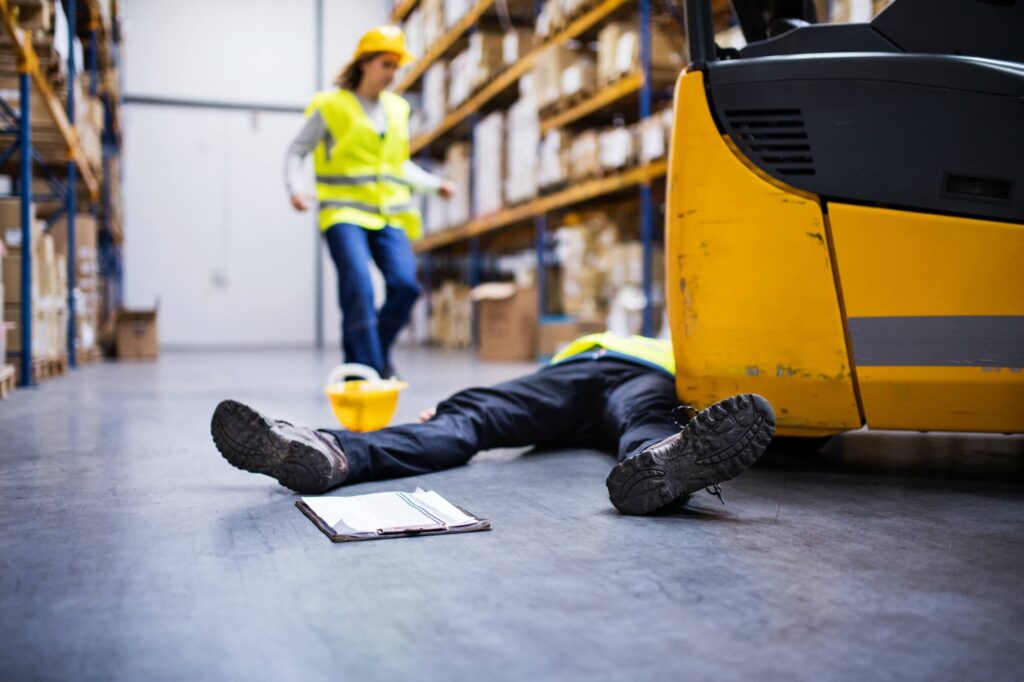
Collisions between forklifts and pedestrians are another major cause of serious injuries. In busy warehouse environments, workers on foot often share the same space with moving forklifts. Many accidents happen when operators fail to look in the direction of travel, drive too fast, or operate in areas with poor visibility. Pedestrians are frequently struck from behind or pinned between the forklift and fixed structures such as racks, walls, or loading docks.
3. Crushing and Trapping Incidents
Crushing injuries occur when workers are caught between the forklift and another object, such as storage racks, walls, or other vehicles. These incidents often happen during loading and unloading operations or when operators are maneuvering in tight spaces. Trapping can also occur when a worker is pinned under a falling load or between the forklift and the ground during a tip-over.
4. Falling Loads
Falling loads are responsible for many severe injuries and fatalities. These accidents usually result from improper load securing, exceeding the forklift’s rated capacity, driving with elevated loads, or operating on uneven surfaces. When a load shifts or falls, it can strike the operator or nearby workers with devastating force.
5. Falls from Elevators or Platforms
Some operators attempt to use the forks as a makeshift elevating platform to reach high places or perform maintenance tasks. This extremely dangerous practice has led to numerous falls from height, resulting in serious injuries or death. OSHA strictly prohibits riding on the forks or using them as a working platform.
The Role of Operator Error and Lack of Training
Behind nearly every forklift incident is human error. Common mistakes include speeding, improper load handling, distraction, fatigue, and poor judgment. Many of these errors stem from inadequate or outdated training. OSHA requires that all forklift operators receive comprehensive training and evaluation specific to the type of equipment they will use. Unfortunately, some employers still rely on minimal or outdated training programs, leaving operators unprepared for real-world challenges.
What Is the Golden Rule of Forklift Operations?
The golden rule of forklift operations is simple yet critical: **“Keep the load low and tilted back while traveling.”** This fundamental principle dramatically reduces the risk of tip-overs and load shifts. By maintaining a low center of gravity and driving at safe speeds while always looking in the direction of travel, operators can prevent the majority of serious accidents. Following this rule consistently is one of the most effective ways to improve safety on the warehouse floor.
Effective Prevention Strategies
Creating a safer forklift environment requires a multi-layered approach:
- Comprehensive initial training and regular refresher courses
- Strict enforcement of speed limits and traffic rules
- Physical separation of pedestrian and forklift traffic where possible
- Installation of proximity warning systems and blue safety lights
- Regular equipment maintenance and daily pre-shift inspections
- Clear signage and designated walkways
Many companies are also switching to more compact and maneuverable equipment for tight spaces. For lighter tasks inside trailers or narrow aisles, compact forklift alternatives such as electric pallet jacks are becoming increasingly popular because they reduce overall risk while maintaining productivity.
Conclusion
Forklift injuries are largely preventable when proper training, safe operating practices, and good workplace design are in place. Tip-overs, pedestrian collisions, falling loads, and crushing incidents remain the primary causes of serious injuries and fatalities. By understanding these risks and implementing strong safety measures — starting with the golden rule of keeping loads low and tilted back — companies can dramatically reduce accidents and protect their most valuable asset: their employees.
Prioritizing forklift safety not only saves lives but also improves productivity, reduces costly downtime, and creates a more positive workplace culture. Every operator and supervisor has a responsibility to make safety the top priority every single day.