
Repairing a pallet jack usually involves bleeding air from the hydraulic system, refilling hydraulic oil, replacing seals, or fixing the lowering mechanism. Common repairs include fixing leaks at the valve cartridge, replacing broken handle chains, or replacing worn wheels. Most repairs can be completed with standard tools, though significant hydraulic failure may cost more to repair than purchasing a new unit.
Can a Pallet Jack Be Fixed?
Yes — the majority of jarak palet problems can be fixed with basic mechanical skills and common hand tools. Most failures are related to hydraulic fluid loss, worn seals, air in the system, or mechanical wear on wheels, rollers, and handles. Early repairs often restore full functionality and extend the life of the equipment by years. However, when the hydraulic cylinder is cracked, the frame is bent, or multiple major components have failed, replacement is usually more cost-effective and safer than repair.
Common Pallet Jack Repairs
Pallet Jack Not Lifting or Has Low Pressure
This is the most frequent issue. The jack pumps but the forks do not rise or rise very slowly. The usual causes are low hydraulic oil, air trapped in the system, or a worn pump seal. Begin by checking the oil level through the filler plug. If low, top up with the correct hydraulic fluid (usually ISO 32 or 46). Then bleed the system by pumping the handle 20–30 times with the release valve open to purge air. If pressure is still weak, the pump seal or valve cartridge may need replacement.
Replacing the Valve O-Ring or Cartridge
Leaking hydraulic fluid around the release valve is a common problem. Remove the handle assembly and unscrew the valve cartridge. Replace the O-rings and any damaged seals using a repair kit (inexpensive and widely available). Clean all parts thoroughly before reassembly. This repair typically takes 15–30 minutes and restores full lifting power.
Replacing the Handle or Chain
Broken or stretched control chains prevent the lifting mechanism from engaging. Remove the old chain by disconnecting the clevis pins. Install a new chain of the correct length and tension. Lubricate the pivot points with light machine oil. This is a fast repair that restores smooth operation.
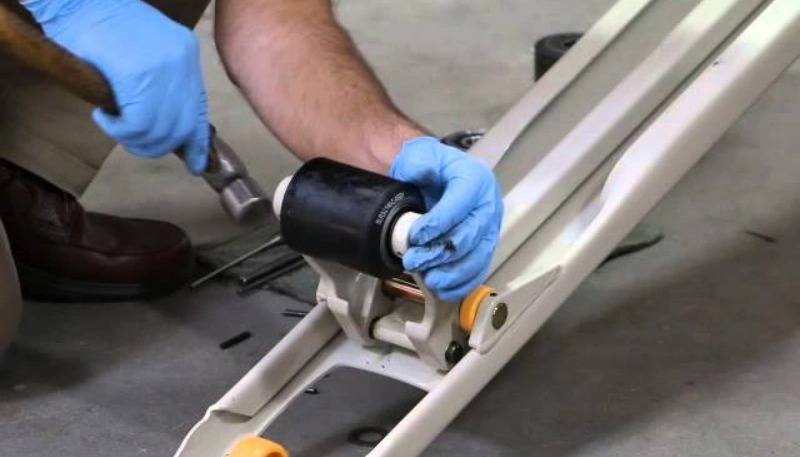
Repairing Wheels and Rollers
Worn or damaged wheels cause difficult steering and excessive noise. Most jarak palet use polyurethane or nylon wheels that can be replaced individually. Jack up the unit, remove the axle bolts or retaining clips, and swap out the wheels. Always replace wheels in pairs on the same axle for even performance.
Pallet Jack Won’t Lower
If the forks stay raised and will not lower, the release valve is usually stuck or the lowering linkage is bent. Spray penetrating oil on the valve and work the handle up and down. If it still won’t lower, disassemble and clean or replace the valve cartridge. Never force the forks down manually — this can bend the cylinder rod.
Tools and Safety Precautions
You will need: hydraulic jack oil, seal repair kit, basic socket set, pliers, screwdriver, penetrating oil, and rags. Always wear safety glasses and gloves. Work on a level surface and never attempt repairs while the jack is under load. Release all pressure and lower the forks completely before starting any work. If the hydraulic cylinder is damaged or leaking badly, stop and replace the unit — attempting to repair a failed cylinder can be dangerous.
When to Replace Instead of Repair
If the frame is cracked, the hydraulic cylinder is bent, or you have already performed multiple repairs in the past year, it is usually more economical to buy a new pallet jack. New electric models offer much longer service life and lower long-term maintenance costs. For reliable performance in daily warehouse operations, consider upgrading to a modern electric unit.
Kesimpulan
Most pallet jack problems can be repaired quickly and inexpensively with basic tools and replacement parts. Common fixes such as bleeding air, replacing seals, fixing handles, and changing wheels restore full functionality and extend equipment life. However, safety must always come first — never work on a loaded jack and replace any unit with structural damage. Regular maintenance and timely repairs keep your material handling equipment running smoothly and safely. When it’s time for a new jarak palet, modern electric models deliver superior performance, reduced maintenance, and longer service life.
 English
  French
  Spanish
  Vietnamese
  Thai
Thai  Italian
  Arabic
  Malay
Malay  Portuguese
  German
  Russian
  Japanese
  Korean
  Lao
Lao  Indonesian
  Turkish
  Irish
Irish  Uzbek
Uzbek