
Yes, modern electric forklifts can effectively lift and transport carpet and tile, provided they are equipped with appropriate attachments like carpet poles, vacuum lifters, or forks. Their high torque and specialized attachments allow them to handle heavy, delicate materials securely, often exceeding the capabilities of older models.
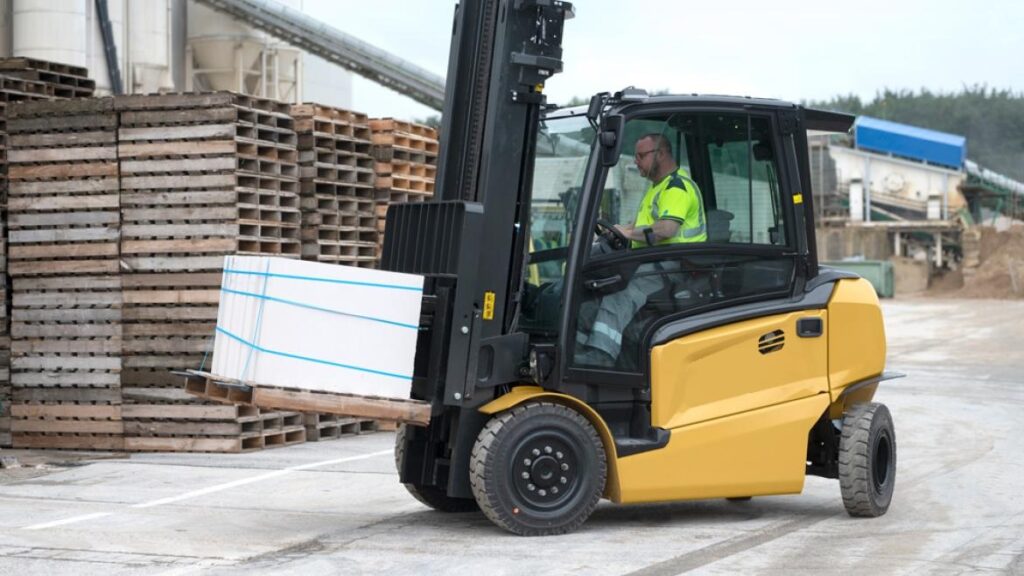
Why Electric Forklifts Excel at Handling Carpet and Tile
Electric forklifts have become the preferred choice for flooring distributors, carpet warehouses, and tile manufacturers because of their precise control, smooth operation, and zero emissions. Unlike propane or diesel models that produce fumes and vibration, empilhadores eléctricos allow safe indoor handling of sensitive materials like carpet rolls and ceramic tile without contamination or excessive noise. Their instant torque and variable speed control make it easier to position heavy or awkward loads exactly where needed.
Specialized Attachments for Carpet and Tile
The key to success is using the right attachment:
- Carpet Poles / Booms: A long, tapered pole slides into the center of a carpet roll. Electric forklifts with side-shift and tilt functions can pick up and rotate rolls weighing up to 2,000–3,000 lbs without damaging the material.
- Vacuum Lifters & Suction Pads: For large-format tile or stone slabs, vacuum attachments create a secure grip on smooth surfaces. Many electric forklifts support these tools directly through auxiliary hydraulics.
- Standard Forks with Tile Clamps: For palletized tile, standard forks work well, while clamp attachments prevent shifting of loose or stacked boxes.
- Side-Shift & Fork Positioners: These hydraulic features allow millimeter-precise adjustments when placing carpet rolls or tile pallets in tight storage racks.
Capacity & Performance Considerations
Most modern electric forklifts (3,000–8,000 lb capacity class) can easily handle standard carpet rolls (up to 1,500 lbs) and palletized tile loads. Lithium-ion models maintain full lifting power throughout the shift, unlike lead-acid units that lose performance as voltage drops. High-torque AC motors provide excellent low-speed control, which is critical when maneuvering heavy carpet rolls or fragile tile pallets in narrow aisles. Always check the forklift’s load chart and never exceed the rated capacity at the actual load center.
Operating Environment & Efficiency
Electric forklifts shine in indoor flooring facilities because they produce no exhaust and run quietly. This creates a safer, cleaner environment for workers handling expensive carpet and tile. Lithium-ion models allow opportunity charging during breaks, keeping the forklift productive across multiple shifts without battery swaps. The smooth acceleration and regenerative braking also reduce product damage by minimizing sudden stops and starts when transporting delicate materials.
Handling Techniques for Carpet and Tile
Best practices include:
- Always use the correct attachment and verify load weight before lifting.
- Keep carpet rolls centered on the pole and tile pallets evenly balanced.
- Drive with forks low (4–6 inches) and tilted slightly back.
- Use slow, controlled speeds when turning with heavy or tall loads.
- Never stack carpet rolls or tile pallets higher than the overhead guard.
What Can an Electric Forklift Lift?
Empilhadores eléctricos can safely lift and transport a wide range of materials beyond carpet and tile, including:
- Palletized goods up to the rated capacity (3,000–8,000 lbs typical)
- Rolled materials (carpet, vinyl, fabric)
- Stone slabs and large-format tile using vacuum lifters
- Drums, machinery, and building supplies with proper attachments
- Heavy equipment components in manufacturing facilities
The limiting factors are always the forklift’s rated capacity at the specific load center and the suitability of the attachment being used.
What Are the Pros and Cons of an Electric Forklift?
Pros:
- Zero emissions and quiet operation
- Lower long-term operating and maintenance costs
- Instant torque and precise control
- Excellent for indoor and clean environments
- Regenerative braking extends battery life
Cons:
- Higher initial purchase price
- Charging time requirements (unless using lithium-ion)
- Limited suitability for heavy outdoor or rough-terrain work
- Battery weight can slightly reduce net lifting capacity
Conclusão
Modern empilhadores eléctricos are highly capable of lifting and transporting carpet and tile when equipped with the proper attachments and operated within rated capacities. Their smooth control, zero emissions, and low maintenance make them the ideal choice for flooring warehouses and distribution centers. By selecting the right attachment (carpet poles, vacuum lifters, or clamps) and following safe handling techniques, operators can move heavy or delicate loads efficiently and safely.
 English
  French
  Spanish
  Vietnamese
  Thai
Thai  Italian
  Arabic
  Malay
Malay  Portuguese
  German
  Russian
  Japanese
  Korean
  Lao
Lao