
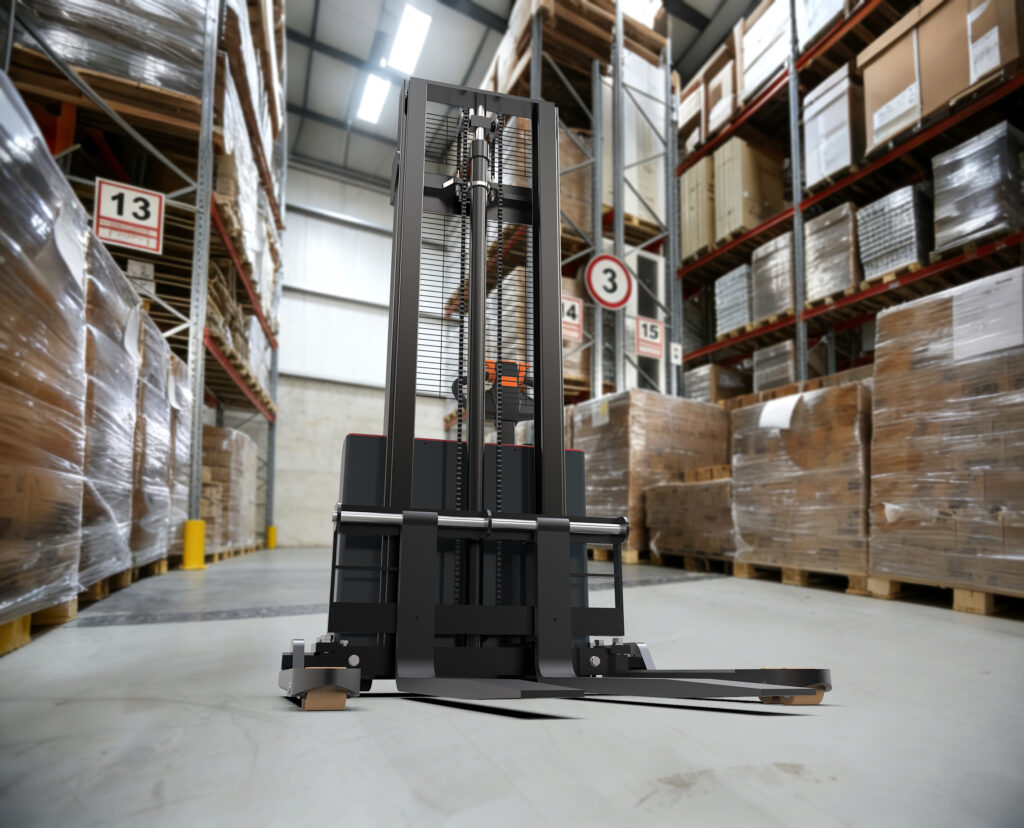
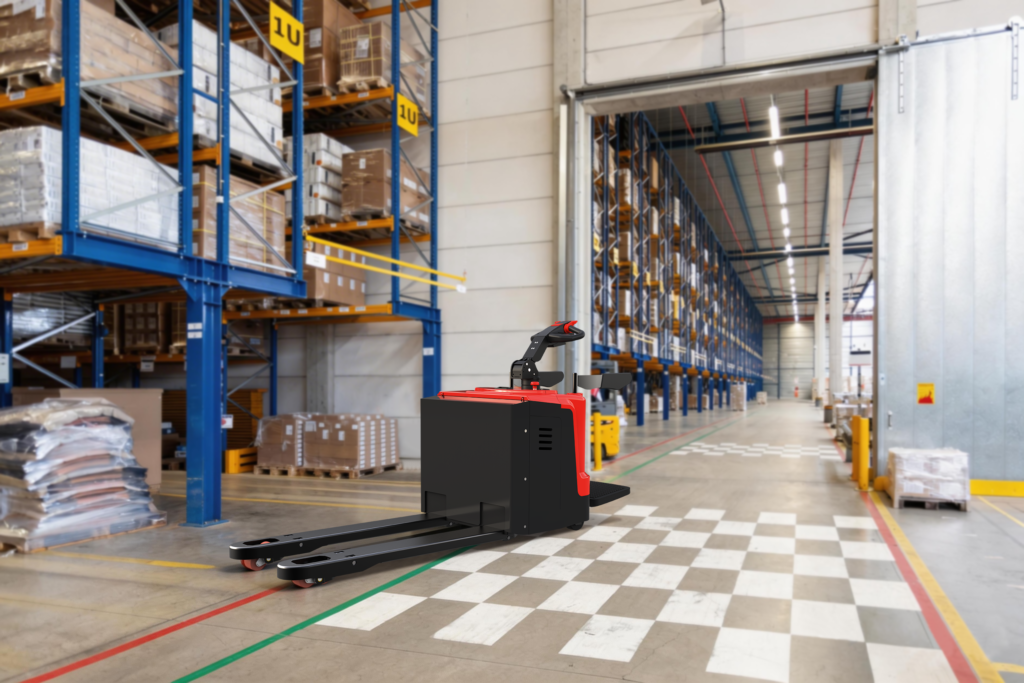
Walking reach trucks (often called walkie stackers) and walkie riders (rider pallet jacks) are not the same; they serve different purposes. Walkie riders are designed for fast, high-volume horizontal transport of pallets over distances, while walking reach trucks are designed for lifting and stacking pallets into racking in tight spaces. Understanding these differences helps warehouses choose the right equipment for maximum efficiency and safety.
Understanding the Two Machines
Although both are pedestrian-operated electric material handling vehicles, walking reach trucks and walkie riders have fundamentally different designs and intended applications. A walking reach truck (walkie stacker) is a specialized lifting machine that can raise pallets to significant heights in narrow aisles. A walkie rider (rider pallet jack) is primarily a horizontal transport device that allows the operator to ride while moving pallets quickly across longer distances. Confusing the two can lead to inefficient operations or safety issues, as each machine excels in its specific role.
Key Differences
| Характеристика | Walking Reach Truck (Walkie Stacker) | Walkie Rider (Rider Pallet Jack) |
|---|---|---|
| Function | Lifting and stacking pallets in racking | Horizontal transport of pallets over longer distances |
| Design & Lifting | Extending mast or pantograph for high lifts (up to 20+ ft) | Low-lift forks only (typically 4–8 inches) |
| Операция | Operator walks alongside; standing position | Operator stands on a riding platform |
| Лучшее применение | Narrow-aisle storage and order picking | Fast pallet movement between areas or loading docks |
Detailed Comparison
Function
A walking reach truck is built for vertical storage. It extends its forks or mast forward to place or retrieve pallets from racking without moving the entire truck body. This makes it perfect for high-density warehouses where space is limited. A walkie rider, by contrast, is optimized for horizontal movement. It carries pallets efficiently across the floor but has very limited lifting capability, usually only enough to clear the ground for transport.
Design & Lifting
Walking reach trucks feature a moving mast or pantograph mechanism that allows the forks to extend deep into racking. They can lift loads to 15–25 feet or higher depending on the model. Walkie riders have fixed low-lift forks and are not designed for stacking. Their primary strength is speed and maneuverability on flat surfaces rather than height.
Операция
Operators of walking reach trucks walk beside the machine and use controls while standing. This gives excellent visibility and precise positioning in tight spaces. Walkie riders allow the operator to stand on a platform and ride, which is more comfortable and faster for long-distance travel but less precise in very narrow aisles.
Лучшее применение
Walking reach trucks are ideal for narrow-aisle, high-bay warehouses where maximizing vertical storage is the priority. Walkie riders shine in high-volume horizontal transport tasks such as moving pallets between receiving, storage, and shipping areas or loading/unloading trailers quickly.
Does a Walkie Stacker Count as a Forklift?
Yes, a walkie stacker (walking reach truck) is legally classified as a type of powered industrial truck and is considered a forklift under OSHA regulations. It requires the same formal operator training and certification as other вилочные погрузчики. Employers must ensure operators are properly trained and evaluated on the specific type of equipment they will use. Treating a walkie stacker as a simple pallet jack can lead to safety violations and increased accident risk.
Choosing Between a Walking Reach Truck and a Walkie Rider
The decision depends on your warehouse layout and workflow. If your operation involves narrow aisles and frequent lifting into tall racking, a walking reach truck is the better choice. If you need to move large volumes of pallets quickly across longer distances on open floors, a walkie rider will be more productive. Many facilities use both machines in combination to optimize their entire material handling process. Understanding the strengths of each helps create a more efficient and safer operation.
Заключение
Walking reach trucks and walkie riders are distinct machines designed for different tasks. While both are pedestrian-controlled electric vehicles, their capabilities, design, and ideal applications are very different. Walking reach trucks excel at lifting and stacking in narrow aisles, whereas walkie riders are optimized for fast horizontal transport. Knowing these differences allows warehouse managers and operators to select the right equipment for their specific needs, improving productivity and safety.
 English
  French
  Spanish
  Vietnamese
  Thai
Thai  Italian
  Arabic
  Malay
Malay  Portuguese
  German
  Russian
  Japanese
  Korean
  Lao
Lao