
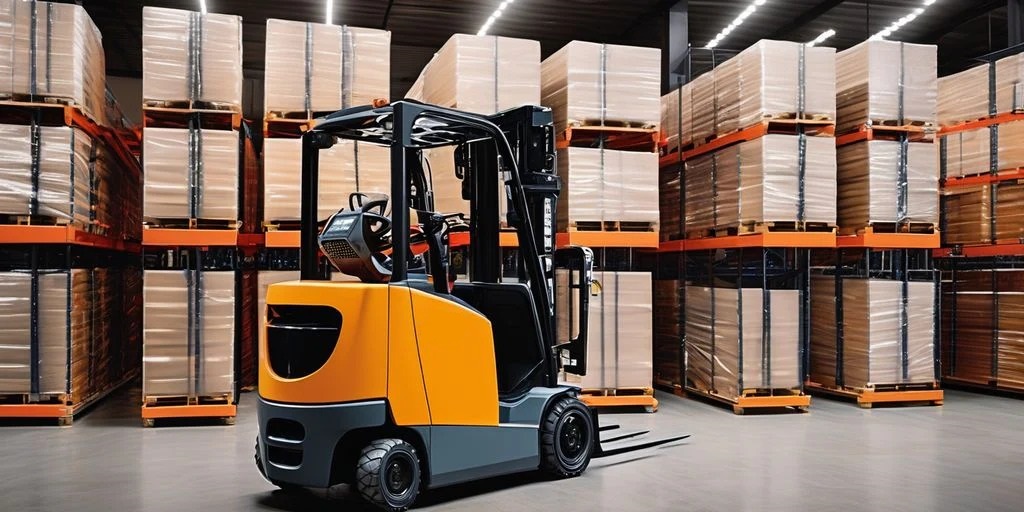
Electric forklifts offer significant advantages, including zero emissions, lower operating and maintenance costs, and reduced noise levels, making them ideal for indoor, eco-friendly warehouse operations. They improve safety with better maneuverability in tight spaces and, due to having fewer moving parts, require less maintenance than internal combustion models.
Environmental & Safety Benefits
รถยกไฟฟ้า produce zero tailpipe emissions, making them the only choice for indoor warehouses, food-grade facilities, and cold storage where air quality is regulated. They eliminate the risk of carbon monoxide poisoning and reduce overall facility ventilation needs. Operators benefit from dramatically lower noise levels — often 10–15 dB quieter than propane or diesel models — which reduces fatigue and improves communication on the floor. Many modern electric forklifts include advanced safety features such as automatic speed reduction in turns, load-sensing hydraulics, and operator-presence sensors that further lower accident rates.
Cost Efficiency & Maintenance
Electricity typically costs 70–80% less than propane or diesel per operating hour. Over a 5–7 year lifespan, the fuel savings alone often offset the higher upfront purchase price. Maintenance is simpler and less expensive because รถยกไฟฟ้า have far fewer moving parts — no oil changes, spark plugs, fuel filters, or exhaust systems to service. Routine tasks are limited to battery watering (for lead-acid) or basic inspections (for lithium-ion). Many fleets report 40–60% lower annual maintenance costs compared with internal combustion forklifts. Lithium-ion models take this advantage even further by eliminating watering and equalization entirely.
Operational Advantages
Electric forklifts deliver instant torque for smooth acceleration and precise control in tight aisles. They perform exceptionally well in cold environments and do not lose power as the shift progresses when using lithium-ion batteries. Opportunity charging allows quick top-ups during breaks, keeping the truck productive across multiple shifts without swapping batteries. The compact design and excellent visibility of modern electric models improve cycle times and reduce product damage. Many warehouses report higher productivity and lower operator turnover after switching to electric fleets.
Disadvantages of Electric Forklifts
- Higher Initial Investment – Electric forklifts and their charging infrastructure cost more upfront than comparable propane or diesel units.
- Battery Charging – Lead-acid models require 8–12 hours of charging plus cool-down time, limiting single-shift flexibility unless spare batteries are available. Lithium-ion reduces this issue but still needs planning.
- Environmental Challenges – While operation is clean, battery production and end-of-life recycling have environmental impacts that must be managed responsibly.
What Is the Best Type of Forklift?
The best forklift depends on your specific application. For indoor warehouses, cold storage, or facilities with strict air-quality rules, รถยกไฟฟ้า are almost always the superior choice. For heavy outdoor work, rough terrain, or continuous 24/7 multi-shift operations without charging infrastructure, propane or diesel models remain more practical. Many large fleets now use a mixed approach: electric units for primary indoor work and internal combustion forklifts for outdoor or high-demand tasks. Lithium-ion electric forklifts are rapidly becoming the new standard for most modern warehouses because they combine clean operation with minimal maintenance and fast charging.
สรุป
Electric forklifts deliver clear advantages in operating costs, maintenance, environmental impact, safety, and productivity that make them the preferred choice for the majority of indoor and many light outdoor applications in 2026. While the higher initial investment and charging requirements must be considered, the long-term savings and operational benefits usually result in a strong return on investment within 2–4 years. As battery technology continues to improve and electricity remains relatively inexpensive, electric forklifts are expected to capture an even larger share of the material-handling market.
 English
  French
  Spanish
  Vietnamese
  Thai
Thai  Italian
  Arabic
  Malay
Malay  Portuguese
  German
  Russian
  Japanese
  Korean
  Lao
Lao