
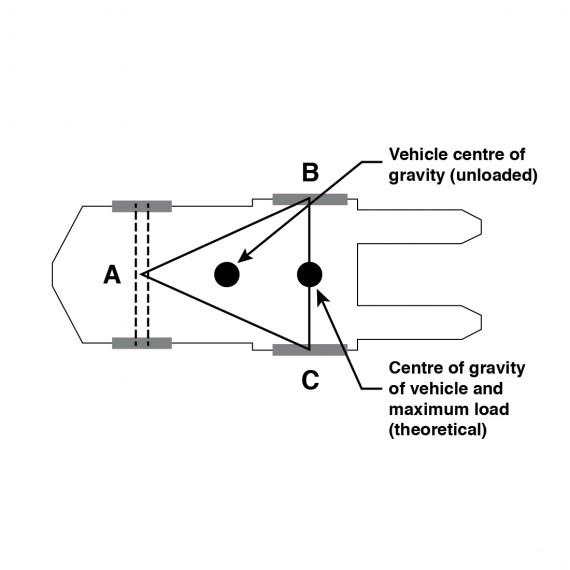
The forklift stability triangle is formed by three key points: the left front wheel, the right front wheel, and the center pivot point of the rear axle. As long as the combined center of gravity (machine + load) remains within this triangle, the forklift will not tip over. Understanding this fundamental concept is essential for safe operation and preventing accidents in warehouses and industrial environments.
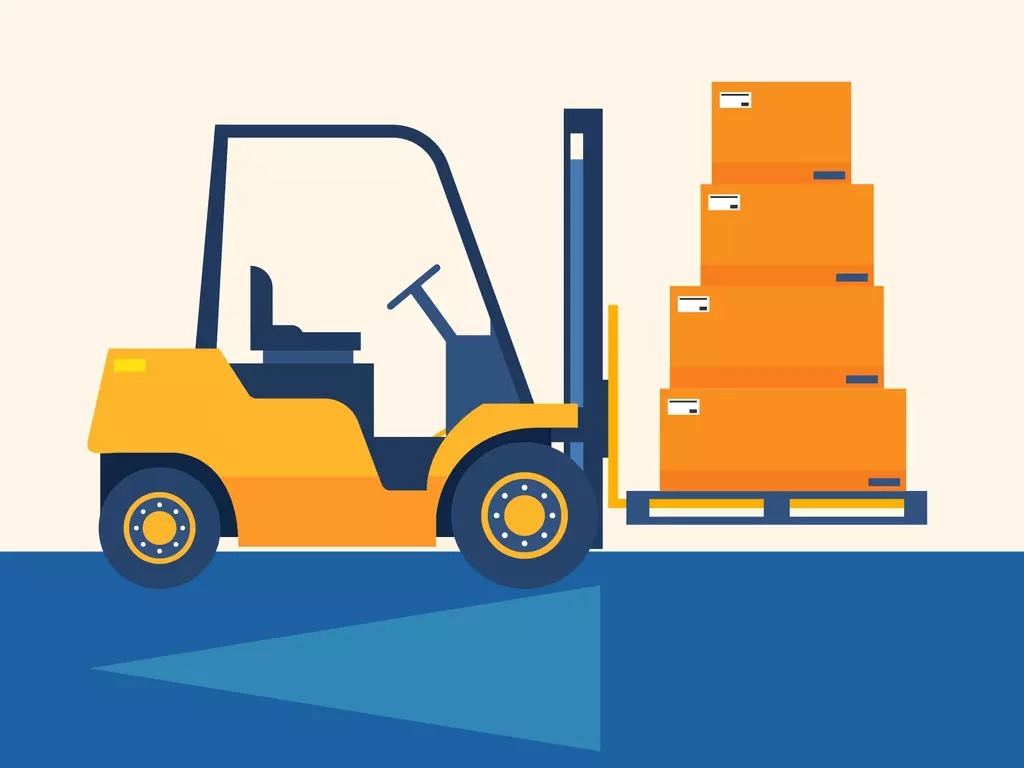
The Fundamentals of the Forklift Stability Triangle
The stability triangle is the invisible foundation of รถยก safety. It represents the area of support created by the forklift’s three main contact points with the ground. Any object remains stable as long as its center of gravity stays inside its base of support. On a forklift, this base is the triangle formed by the two front wheels and the pivot point of the rear axle. When the combined center of gravity of the forklift and its load moves outside this triangle, the machine becomes unstable and can tip over. This principle applies whether the forklift is moving, lifting, turning, or braking.
The Three Key Points of the Stability Triangle
Front Points (B & C): The Center of Each Front Drive Tire
The two front wheels form the base of the triangle. These are the drive wheels on most forklifts and provide the primary support when a load is carried on the forks. The distance between these two points is fixed by the width of the forklift. The wider the front stance, the larger and more stable the triangle becomes. Any shift of the load forward or to one side moves the center of gravity closer to the edge of the triangle formed by these two points.
Rear Point (A): The Center Pivot Pin of the Steer Axle
The rear point is the center pivot pin of the steer axle. Unlike the front wheels, the rear axle pivots, allowing the forklift to turn. This single point completes the triangle. Because the rear axle can pivot, the stability triangle changes slightly during turns, making turning with a raised load especially dangerous. The rear pivot point is the most critical reference when calculating stability during cornering or on uneven surfaces.
How the Center of Gravity Works Within the Triangle
The combined center of gravity is the single point where the weight of the รถยก and the load is perfectly balanced. When the forks are empty, the center of gravity is near the middle of the forklift, well inside the triangle. As the forks lift a load, the center of gravity moves forward. If the load is too heavy or positioned too far forward, the center of gravity can shift outside the front line of the triangle, causing the forklift to tip forward. Turning, braking, or driving on an incline can also move the center of gravity sideways or backward, increasing the risk of a side or rear tip-over.
Practical Safety Implications
Understanding the stability triangle helps operators make better decisions every day. Always keep loads as low as possible and tilted slightly back. Avoid sharp turns with raised loads. Never exceed the rated capacity shown on the forklift’s data plate. When driving on ramps, keep the load pointed uphill when going up and downhill when going down. These simple habits keep the combined center of gravity safely inside the triangle and dramatically reduce the risk of tip-overs, which are a leading cause of forklift-related injuries and fatalities.
Common Mistakes That Cause Tip-Overs
Many tip-overs occur when operators unknowingly move the center of gravity outside the triangle. Common mistakes include driving with the load raised too high, making sharp turns while loaded, traveling across slopes, or adding unauthorized attachments that change the forklift’s balance. Even something as simple as sudden braking or acceleration can shift the center of gravity enough to cause instability if the load is already near the edge of the triangle.
สรุป
The รถยก stability triangle is formed by three specific points: the center of the left front wheel, the center of the right front wheel, and the center pivot pin of the rear steer axle. As long as the combined center of gravity of the forklift and its load stays inside this triangle, the machine remains stable. Operators who understand this principle and apply it consistently make safer decisions every day. Proper training, respect for load limits, and careful operation are the best defenses against tip-overs.
 English
  French
  Spanish
  Vietnamese
  Thai
Thai  Italian
  Arabic
  Malay
Malay  Portuguese
  German
  Russian
  Japanese
  Korean
  Lao
Lao