
A forklift load center is the horizontal distance from the vertical face of the forks to the load’s center of gravity. It is crucial for safety and capacity, as exceeding the designated load center (usually 24 inches) reduces the maximum weight a forklift can safely lift, risking forward tip-overs.
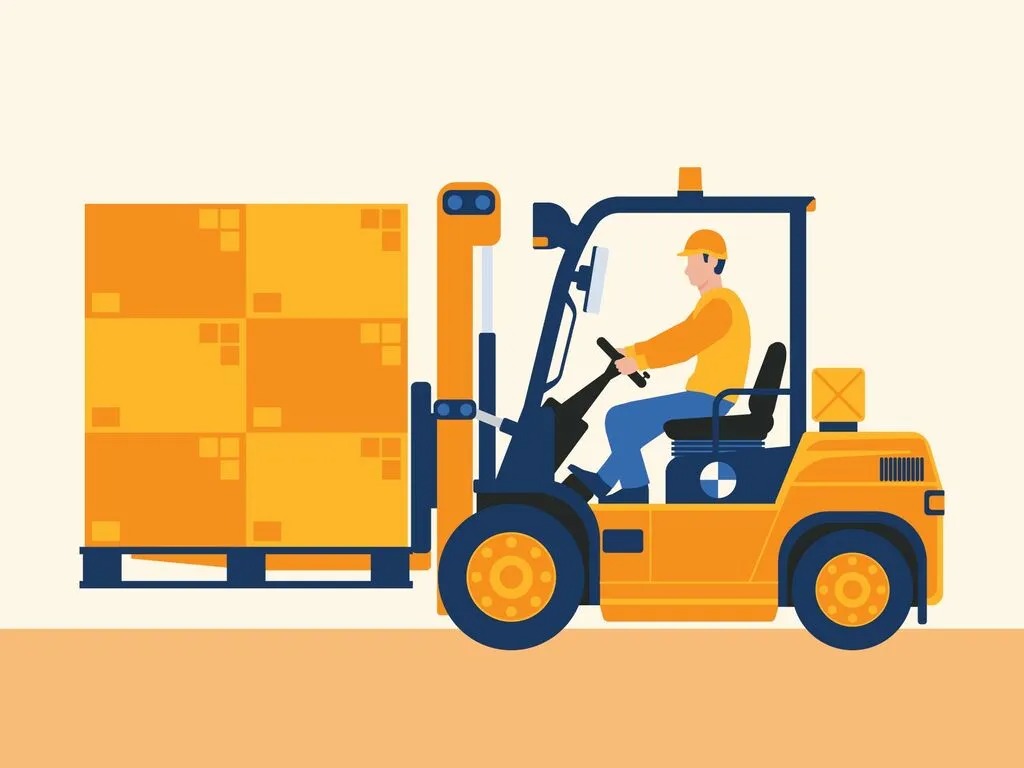
Definition of Load Center
The load center is the point where the weight of the load is balanced, measured horizontally from the vertical face of the fork’s backrest (the carriage) to the center of gravity of the load. It is one of the most important specifications on every forklift’s data plate. Manufacturers rate capacity assuming a standard 24-inch load center, which corresponds to a uniformly distributed 48-inch-long load. If the center of gravity moves farther forward (longer or uneven load), the forklift’s effective lifting capacity drops dramatically.
Why the Standard 24-Inch Load Center Matters
Most forklifts sold in the United States and Canada are designed and rated for a 24-inch load center. This number is not arbitrary — it assumes the load is evenly distributed across a standard 48-inch pallet. When the load center is exactly 24 inches, the forklift can lift its full rated capacity (for example, 5,000 lbs on a 5,000-lb-rated machine). Moving the center of gravity just a few inches forward can reduce capacity by hundreds or even thousands of pounds. This is why every forklift operator must understand load center before picking up any load.
How Load Center Affects Lifting Capacity
Forklift capacity is calculated using a simple principle of leverage. The farther the load center moves from the fulcrum (the front axle), the less weight the forklift can safely carry. Most data plates include a capacity derating chart. For example:
- At 24 inches: full rated capacity (e.g., 5,000 lbs)
- At 30 inches: capacity may drop to 4,000 lbs
- At 36 inches: capacity may drop to 3,333 lbs
- At 48 inches: capacity may drop to 2,500 lbs
Exceeding the rated load center is one of the most common causes of forward tip-overs. The forklift becomes unstable because the combined center of gravity of the machine and load moves forward of the front axle.
How to Find the Load Center on Your Forklift
The easiest way is to look at the forklift’s data plate, usually located on the left side of the overhead guard or near the operator’s seat. The plate shows the rated capacity at a specific load center (most often 24 inches). Some newer forklifts also display derating charts or electronic load-moment indicators that calculate safe capacity in real time. If the plate is missing or illegible, the forklift must be taken out of service until the manufacturer or a qualified technician provides the correct information.
Safety Tip: Keep the Load as Close as Possible
To maximize capacity and stability, always slide the load all the way back against the fork backrest before lifting. Never pick up a load with the forks extended far forward. If you must handle a longer load (e.g., lumber or pipe), check the forklift’s capacity chart first and reduce the maximum weight accordingly. Never exceed the rated capacity at the actual load center you are using.
What Happens When the Load Center Is Increased?
When the load center increases, the forklift’s effective lifting capacity decreases proportionally. The machine must work harder to counteract the extra leverage, which moves the combined center of gravity closer to — or past — the tipping point at the front axle. This dramatically raises the risk of a forward tip-over, especially when turning, traveling on ramps, or stopping suddenly. Even if the load weight is under the rated capacity at 24 inches, moving the center of gravity to 36 inches can make the same load unsafe. Operators who ignore load center often experience sudden loss of stability, leading to dropped loads, property damage, or serious injuries.
Conclusion
The load center is the single most important factor determining whether a forklift can safely lift a given load. Understanding the 24-inch standard, reading the data plate, and always keeping loads tight against the backrest prevents tip-overs and keeps operations running smoothly. Proper load-center awareness, combined with daily inspections and operator training, is the foundation of safe forklift use in any warehouse or distribution center. Ignoring load center is one of the fastest ways to turn a routine lift into a dangerous accident.