
According to OSHA regulations, a forklift is considered unattended if the operator is 25 feet or more away from the vehicle or if it is out of their direct view. When these conditions are met, the operator must fully lower the forks, neutralize controls, set the parking brake, and shut off the power. Following these steps prevents unauthorized use and serious accidents.
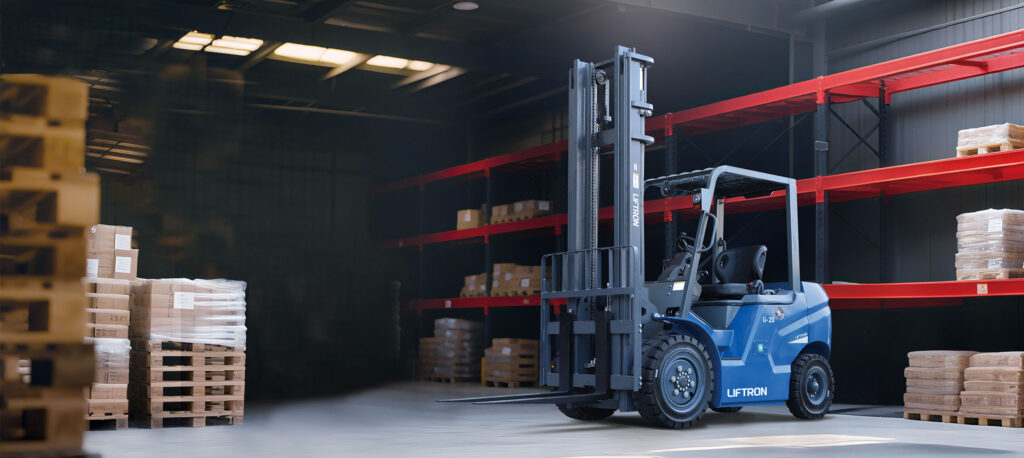
OSHA Definition of an Unattended Forklift
OSHA standard 29 CFR 1910.178(l) clearly defines when a forklift is considered unattended. The rule is straightforward: if the operator is more than 25 feet away from the forklift or cannot see it from their current location, the vehicle is officially unattended. This definition exists to protect workers and property. Even a brief absence can turn a forklift into a hazard if it is not properly secured. The regulation applies to all powered industrial trucks, including stand-up rider trucks, sit-down forklifts, reach trucks, and order pickers used in warehouses, factories, and construction sites.
Complete Shutdown Procedure for Unattended Forklifts
When you must leave the forklift, OSHA requires a specific sequence of actions to make it safe:
- Lower the forks completely to the ground or rest position.
- Place the directional control in neutral.
- Set the parking brake firmly.
- Turn off the power (key switch or power button).
These four steps must be completed every time the operator moves more than 25 feet away or loses direct line of sight. The goal is to prevent the forklift from rolling, being started by unauthorized persons, or causing injury if someone accidentally bumps the controls.
Special Rules for Parking on Inclines
When parking on an incline, additional precautions are mandatory. In addition to the standard shutdown procedure, the wheels must be securely blocked (chocked) to prevent the forklift from rolling. Always position the forklift so the load is facing uphill when parking on a slope. This extra step is critical because gravity can cause a parked forklift to move unexpectedly, especially if the parking brake alone is not sufficient on steep surfaces.
Should You Remove the Key?
OSHA strongly recommends removing the key whenever the forklift is left unattended. Removing the key prevents unauthorized operation and reduces the risk of accidents caused by untrained or careless individuals. In many companies, this is a strict policy enforced through daily checklists and supervisor audits. Leaving the key in the ignition is one of the most common violations found during safety inspections.
Can a Forklift Be Left Unattended?
Technically yes — but only if you follow the complete OSHA shutdown procedure described above. You cannot simply walk away and leave the forklift running or with forks raised. Doing so violates federal regulations and dramatically increases the chance of serious incidents. Many workplaces have additional internal policies that prohibit leaving forklifts unattended for more than a few minutes even when properly secured. The safest practice is to park the forklift in a designated, well-lit area away from pedestrian traffic and high-activity zones.
What Is the Rule 3 for Forklifts?
In forklift operator training programs across the United States, “Rule 3” commonly refers to the requirement to never leave a forklift unattended without first lowering the forks, setting the brake, neutralizing controls, and shutting off the power. While OSHA does not officially number its rules this way, training providers and safety departments use “Rule 3” as a simple, memorable way to teach the unattended forklift procedure. It is often taught alongside Rule 1 (never drive with forks raised) and Rule 2 (never carry passengers). Following Rule 3 consistently is one of the easiest ways to prevent many common forklift accidents.
Common Mistakes Operators Make
Even experienced operators sometimes skip proper unattended procedures. Common mistakes include:
- Leaving the forklift running while stepping away briefly
- Raising the forks while parked
- Parking on an incline without blocking the wheels
- Leaving the key in the ignition
- Assuming a quick stop doesn’t count as “unattended”
These shortcuts can lead to OSHA citations, accidents, and expensive damage. Consistent adherence to the rules protects everyone in the workplace.
Best Practices for Safe Forklift Parking
To stay compliant and safe:
- Always plan parking locations in advance
- Use designated parking areas away from walkways and exits
- Perform the full shutdown sequence every time you step away more than 25 feet or lose sight
- Remove the key and keep it with you
- Conduct regular refresher training for all operators
Supervisors should perform random checks to ensure compliance. Companies that treat unattended forklift rules seriously see fewer incidents and lower insurance costs.
Conclusion
A forklift is considered unattended whenever the operator is 25 feet or more away or cannot see the vehicle. At that moment, the full OSHA shutdown procedure must be followed: lower the forks, neutralize controls, set the parking brake, shut off the power, and remove the key. On inclines, wheels must also be blocked. Following these rules — often remembered as “Rule 3” in training programs — prevents unauthorized use and serious accidents. Consistent adherence to these standards protects operators, coworkers, and company property while helping maintain full regulatory compliance.