
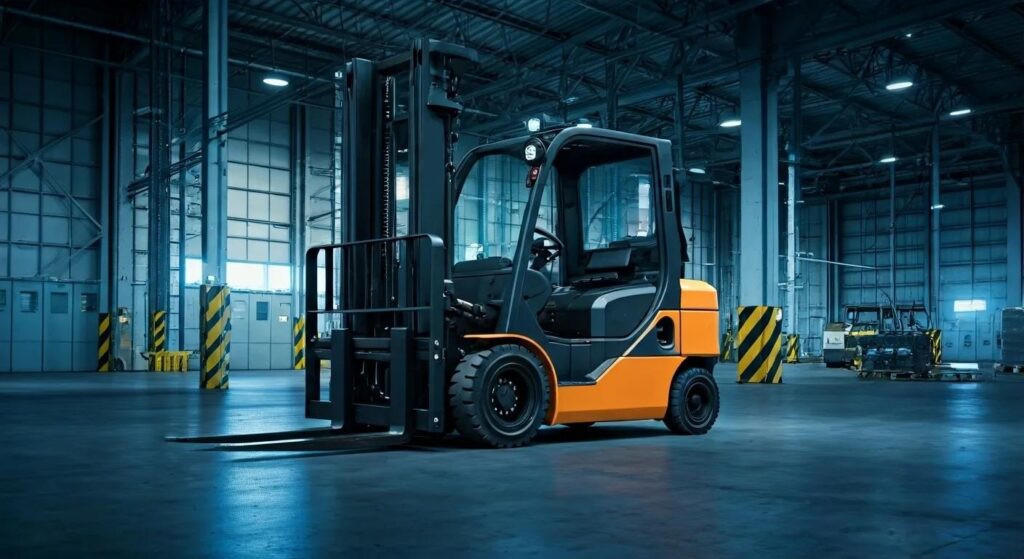
Modern electric forklifts achieve impressive runtimes through smart integration of lithium-ion batteries, advanced battery management systems, regenerative energy recovery, and intelligent software controls. These technologies work together to minimize energy waste and support demanding multi-shift warehouse operations with minimal downtime.
The Evolution of Forklift Power Management
Traditional lead-acid powered forklifts often struggled with limited runtime, frequent charging needs, and performance drops toward the end of a shift. Today’s chariots élévateurs électriques have largely overcome these limitations. Manufacturers now focus on maximizing every watt of energy while maintaining consistent power delivery throughout long operating hours. This shift has transformed electric forklifts into highly efficient machines capable of matching or exceeding the productivity of their internal combustion counterparts.
1. Advanced Battery Management Systems (BMS)
At the heart of modern power optimization lies a sophisticated Battery Management System. A high-quality BMS continuously monitors individual cell voltage, temperature, and current in real time. It actively balances cells to prevent weak links, protects against over-discharge or over-charge, and provides precise state-of-charge data to the operator and forklift controller. This level of monitoring ensures the battery operates within its optimal range, significantly extending both daily runtime and overall lifespan.
2. Lithium-Ion Technology & Opportunity Charging
Lithium-ion batteries have revolutionized forklift power. Compared to lead-acid, they deliver consistent voltage throughout the discharge cycle, maintain higher efficiency, and support rapid opportunity charging. Operators can plug in during short breaks — 15 to 30 minutes — and regain substantial runtime without waiting for a full 8-hour charge. This flexibility is especially valuable in high-throughput warehouses running multiple shifts. Lithium packs also produce far less heat and require virtually no maintenance.
3. Regenerative Braking and Lowering Systems
Modern electric forklifts capture energy that would otherwise be lost. Regenerative braking converts kinetic energy back into electricity when slowing down or stopping. Even more impressive is regenerative lowering: when the forks descend under load, the hydraulic system acts as a generator, feeding energy back into the battery. In typical warehouse duty cycles involving frequent lifting and lowering, these systems can recover 10–30% of the energy used, directly extending operating time.
4. Intelligent Power Management & Efficiency Features
Advanced controllers dynamically adjust power output based on real-time demands. Features such as ECO modes reduce maximum acceleration and lift speed when full power is not required, while still delivering peak performance when needed. Some models automatically switch between performance profiles depending on the task — gentle for precision work or aggressive for high-speed travel. Variable speed pumps and efficient AC motors further minimize energy consumption without sacrificing productivity.
5. Telematics and Data Analytics
Connected telematics systems provide fleet managers with detailed insights into energy usage patterns. Data on charging frequency, idle time, lift cycles, and operator behavior help identify inefficiencies. Some systems can automatically suggest optimal charging windows or alert managers when a truck’s power management settings need adjustment. Over time, this data-driven approach leads to measurable improvements in overall fleet energy efficiency.
What Is the Most Reliable Forklift Brand?
When evaluating reliability alongside power management capabilities, several brands stand out in 2026:
- Best Overall Reliability: Toyota continues to set the benchmark for durability and uptime.
- Best for Indoor Warehouses: Crown, Linde, and Liftron excel in tight spaces and high-cycle operations.
- Best for Electric Performance: Mitsubishi and Linde deliver outstanding efficiency and smooth power delivery.
- Best Value for Money: Cat, Mitsubishi, Hyundai, and Hyster-Yale offer strong performance at competitive prices.
- Best for Rough Terrain: Cat and Komatsu remain leaders in demanding outdoor applications.
Conclusion
Modern electric forklifts have reached a new level of power management sophistication. Through advanced lithium-ion batteries, intelligent BMS, regenerative systems, smart controls, and data analytics, they deliver longer runtimes, faster recovery, and lower operating costs than ever before. These innovations allow warehouses to run more shifts with fewer batteries and reduced charging infrastructure. For operators seeking reliable, high-efficiency electric forklifts backed by strong local support, brands like Liftron continue to deliver excellent real-world performance. As battery and control technology continue to advance, the gap between electric and traditional power sources will only widen in favor of cleaner, smarter electric solutions.
 English
  French
  Spanish
  Vietnamese
  Thai
Thai  Italian
  Arabic
  Malay
Malay  Portuguese
  German
  Russian
  Japanese
  Korean
  Lao
Lao  Indonesian
  Turkish
  Irish
Irish  Uzbek
Uzbek