
The forklift fall zone is the dangerous area under and around a raised load where materials could fall and injure workers.
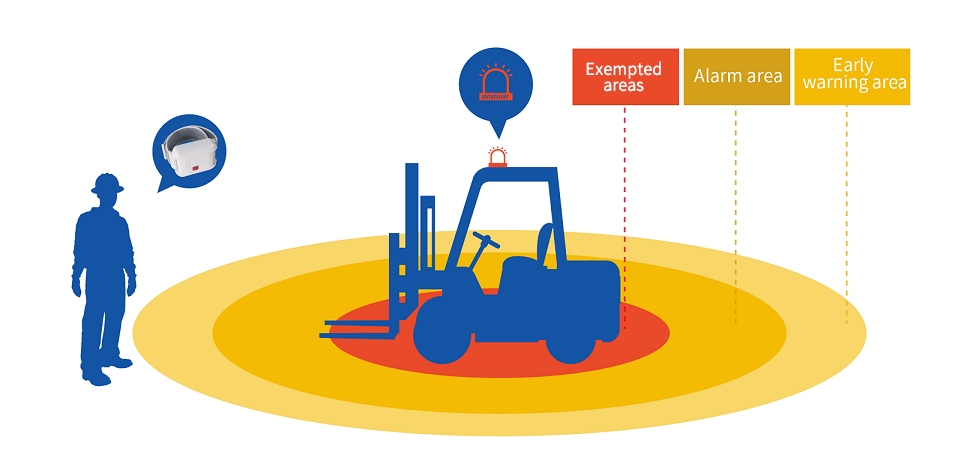
The fall zone for a forklift operation is the area directly beneath a suspended or elevated load, along with the surrounding space where the load, pallet, product, attachment, or part of the forklift could land if something falls, shifts, tips, or collapses. It is one of the highest-risk areas in material handling because workers inside the zone may be struck by falling objects or caught in a forklift tip-over incident.
In any workplace using a フォークリフト, the fall zone must be treated as a restricted area. When a forklift is lifting, lowering, stacking, unstacking, or carrying an elevated load, pedestrians and other workers should stay clear. Even a load that appears stable can shift unexpectedly because of poor pallet condition, uneven weight distribution, sudden braking, mast tilt, rack contact, damaged packaging, or operator error.
OSHA’s powered industrial truck standard, 29 CFR 1910.178, covers forklift operation and training requirements, while OSHA also provides forklift operating guidance through its Powered Industrial Trucks resources. OSHA emphasizes that powered industrial trucks are used to move, raise, lower, and remove materials, and that their hazards vary by vehicle type and workplace conditions. :contentReference[oaicite:0]{index=0}
Key Aspects of the Forklift Fall Zone
| Key Aspect | What It Means in Forklift Operation |
|---|---|
| Location | The fall zone includes the area directly under a raised load and the nearby area where objects could fall, bounce, roll, or slide. |
| Dynamic Nature | The fall zone changes as the forklift moves, turns, raises, lowers, tilts, or places the load. |
| Size Factors | The zone depends on load height, load size, weight, shape, pallet condition, attachment type, and operating environment. |
| Minimum Safety Distance | Workers should stay far enough away that they cannot be struck if the load falls, shifts, or tips. Many sites establish marked exclusion zones. |
| OSHA Requirements | Forklift safety is primarily covered under OSHA 29 CFR 1910.178, including operator training, safe operation, inspection, and workplace precautions. |
Location: Where Is the Fall Zone?
The most obvious part of the forklift fall zone is directly under the raised load. No worker should stand, walk, or reach beneath elevated forks or a suspended load. This includes loads on pallets, containers, bins, bags, pipes, lumber, drums, crates, machinery parts, or any other material being lifted.
The fall zone is not limited to the exact footprint under the forks. Materials rarely fall straight down in a perfect line. A load may slide off the forks, roll from a pallet, bounce after hitting the floor, or fall outward if the forklift tips. For that reason, the fall zone includes the surrounding area where falling material could reasonably travel.
In warehouses, this means workers should avoid standing near rack openings while a forklift is placing or retrieving pallets. In loading docks, employees should stay clear when a forklift is unloading trucks. In outdoor yards, workers should avoid the area around elevated pipe bundles, lumber packs, stone, steel, or oversized loads.
Dynamic Nature: The Fall Zone Moves
A forklift fall zone is dynamic, meaning it changes as the forklift moves. When the operator raises the mast, the hazard area expands. When the forklift turns, the load may swing, shift, or create a wider danger area. When the forklift travels with the load raised too high, the fall zone moves with the truck and becomes more difficult for pedestrians to predict.
This is why communication and visibility are important. Operators should use horns, lights, and safe travel paths where appropriate. Pedestrians should never assume that an operator sees them. In mixed-traffic areas, marked walkways, barriers, mirrors, warning signs, and traffic rules can help keep people outside the fall zone.
Size Factors: How Big Is the Fall Zone?
There is no single universal fall-zone distance that fits every forklift operation. The correct safe distance depends on the height of the lift, the type of load, the weight, the load shape, the stability of the pallet, and the surrounding workplace.
A small, shrink-wrapped pallet lifted a few inches off the floor creates a different hazard than a tall, unstable pallet lifted 20 feet into a storage rack. A long pipe bundle, wide machinery component, or stacked loose material may require a larger exclusion area because it can fall or roll farther.
Other factors include floor slope, forklift speed, attachment type, rack layout, aisle width, wind conditions for outdoor work, and pedestrian traffic. A safe workplace should evaluate these factors and create site-specific rules rather than relying on guesswork.
Minimum Safety Distance
A practical minimum rule is simple: no person should be close enough to be struck if the load drops, tips, slides, or bounces. Many workplaces create a marked exclusion zone around active forklift lifting areas. The higher or more unstable the load, the larger the exclusion zone should be.
Workers should also stay away from the sides of a forklift when it is lifting or lowering. If a forklift tips, the danger area may extend beyond the load itself. Pedestrians should never stand between a forklift and a fixed object, rack, wall, truck, or stacked material. This creates a crush hazard in addition to the falling-object hazard.
Why the Forklift Fall Zone Is Dangerous
The fall zone is dangerous because gravity acts fast and gives workers little time to react. A load can fall because the pallet breaks, forks are not fully inserted, the mast is tilted incorrectly, the operator brakes suddenly, or the load is not centered. Even a small object falling from height can cause serious injury.
Forklift tip-overs are another major concern. If the load is too heavy, raised too high, turned too sharply, or handled on an uneven surface, the forklift may become unstable. A tip-over can cause the load, mast, forks, or truck itself to enter the fall zone. This is why safe load handling and pedestrian separation are essential.
What Regulations Cover Forklift Fall Zones?
Forklift fall zones are not always defined by OSHA as one single “fall zone” rule. Instead, the concept is covered through several safety requirements and standards related to powered industrial trucks, material handling, training, and workplace hazard control. The primary OSHA general industry forklift standard is 29 CFR 1910.178, Powered Industrial Trucks, which includes requirements for forklift design, maintenance, use, and operator training.
OSHA’s powered industrial truck resources also identify forklift hazards and link to applicable standards, including 1910.178 for general industry and related standards for other industries. Employers are responsible for training operators, maintaining equipment, controlling workplace hazards, and ensuring safe operation.
In practical terms, regulations require employers to prevent workers from being exposed to recognized forklift hazards. This includes keeping pedestrians away from elevated loads, training operators on safe load handling, inspecting trucks, following capacity limits, using approved attachments correctly, and creating traffic controls where forklifts and pedestrians share space.
Best Practices for Controlling the Fall Zone
Employers should identify forklift lifting areas and establish clear pedestrian exclusion rules. Marked floor lines, cones, barriers, warning signs, and designated walkways can help workers understand where they should and should not stand. In high-risk operations, a spotter or signal person may be useful, but the spotter must also remain outside the fall zone.
Operators should keep loads low while traveling, lift only when positioned correctly, avoid sudden braking, and never raise unstable loads over people. Loads should be centered on the forks, secured when needed, and inspected for damaged pallets or loose materials before lifting.
Pedestrians should make eye contact with operators, avoid shortcuts through forklift work zones, never walk under raised forks, and follow site traffic rules. Safety is shared: operators control the truck, but pedestrians must respect the hazard zone.
Forklift Fall Zone Safety Checklist
| Checklist Item | Safe Practice |
|---|---|
| Raised Load | Keep all workers out from under and around elevated loads. |
| Load Stability | Check that pallets are not broken and materials are centered, balanced, and secure. |
| Travel Position | Keep loads low while traveling and raise only when placing or retrieving materials. |
| Pedestrian Control | Use marked walkways, barriers, signs, and communication to separate people from lifting areas. |
| Operator Training | Train operators under OSHA powered industrial truck requirements and site-specific hazards. |
| Equipment Inspection | Inspect forks, mast, chains, hydraulics, tires, brakes, and attachments before use. |
結論
The fall zone for a forklift operation is the area under a raised load and the surrounding space where materials, pallets, attachments, or the forklift itself could fall, shift, roll, or tip. It is a high-risk area that must remain clear whenever a forklift is lifting, lowering, stacking, or handling elevated materials.
OSHA forklift safety is primarily addressed through 29 CFR 1910.178 and related powered industrial truck guidance. While the exact fall-zone size depends on the load and workplace, the safety principle is always the same: keep workers away from elevated loads and unstable material handling operations. Clear exclusion zones, trained operators, safe load handling, and strong pedestrian controls are the best ways to prevent serious forklift fall-zone injuries.
 English
  French
  Spanish
  Vietnamese
  Thai
Thai  Italian
  Arabic
  Malay
Malay  Portuguese
  German
  Russian
  Japanese
  Korean
  Lao
Lao  Indonesian
  Turkish
  Irish
Irish  Uzbek
Uzbek