
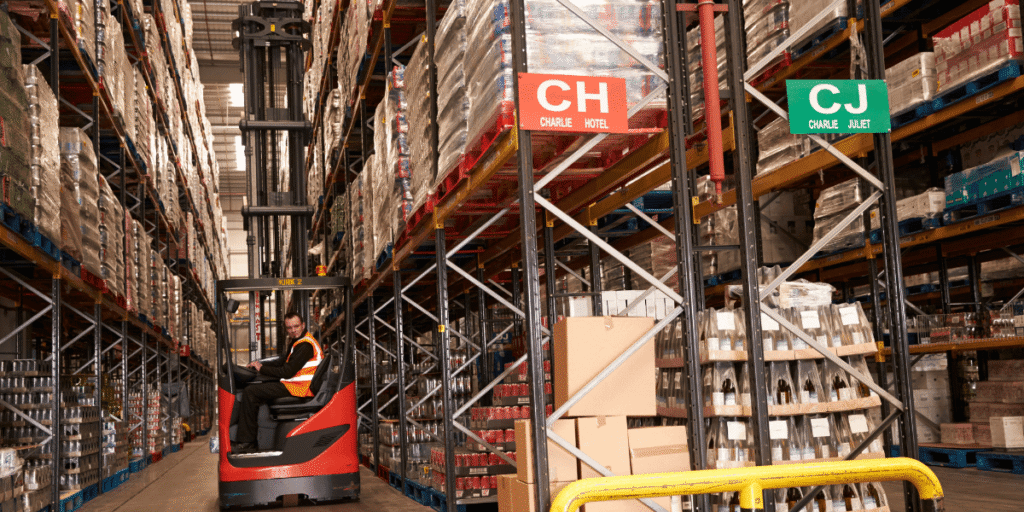
Driving a reach truck requires specialized training and certification. Key operations involve standing sideways to operate controls, using the reach mechanism to extend/retract forks, steering with the rear wheels, and navigating in reverse for better visibility. Always keep forks low (4–6 inches) when traveling and maintain a 3-point contact when mounting.
What Qualifications Do I Need to Operate a Reach Truck?
Operating a reach truck is a skilled job that demands formal training and certification. In most regions, you must complete an OSHA-compliant operator training program specific to reach trucks, followed by a practical evaluation. Employers are required to provide this training and keep records of certification. Refresher training is usually needed every three years or after an accident or unsafe operation. Only certified operators are legally allowed to drive these specialized machines in a warehouse environment.
Basic Operating Procedures
Mounting the Reach Truck
Always use the three-point contact method when entering the operator compartment: two hands and one foot, or one hand and two feet. Face the direction of travel, grasp the handrails, and step up carefully. Never jump into the truck or carry items while mounting.
Starting the Reach Truck
Stand in the sideways operating position with your back against the support pad. Place your foot firmly on the deadman pedal (operator presence switch). Turn the key or press the power button to start the truck. The display will run through a self-check before allowing operation.
Controls and Joystick Operation
The multi-function control handle (joystick) manages several functions. Pulling back lifts the forks, pushing forward lowers them. Side-to-side movement extends or retracts the mast/forks. Tilting is often controlled by twisting the handle or using a separate lever. Familiarize yourself with the exact layout of your specific model before operating.
Driving and Steering
Reach trucks steer from the rear wheels, which creates a very tight turning radius. Drive in reverse whenever carrying a load so you have clear visibility over your shoulder. Keep the load low (4–6 inches off the ground) and centered. Travel at a slow, controlled speed, especially in narrow aisles or around corners. The truck responds quickly, so smooth inputs on the controls are essential for safe operation.
Loading and Unloading (Picking and Placing Pallets)
Approach and Positioning
Drive straight toward the racking with the forks low. Stop approximately 6 inches away from the pallet. Center the forks under the pallet using the reach mechanism for precise alignment.
Lifting and Reaching
Lift the pallet just enough to clear the racking beam. Extend the mast or forks fully forward into the storage position. Lower the pallet gently onto the rack beams, ensuring the forks are level and clear of the pallet supports.
Retracting and Departing
Retract the mast fully before lowering the forks. Back away slowly while keeping the load low. Always look in the direction of travel and use the horn when approaching blind corners or intersections.
안전 모범 사례
Never travel with the forks raised higher than 4–6 inches. Maintain a safe distance from other equipment and pedestrians. Keep your body inside the operator compartment at all times. Use the horn liberally in busy areas. Perform a daily pre-operation inspection of the truck, forks, mast, and safety devices before use. Report any defects immediately and do not operate an unsafe reach truck.
결론
Driving a reach truck is a skilled operation that requires proper training, careful technique, and constant attention to safety. By mastering the sideways operating position, understanding the reach mechanism, and following correct loading and driving procedures, you can work efficiently and safely in narrow-aisle, high-density warehouse environments. Regular refresher training and daily inspections are essential for maintaining both your safety and the equipment’s reliability.
 English
  French
  Spanish
  Vietnamese
  Thai
Thai  Italian
  Arabic
  Malay
Malay  Portuguese
  German
  Russian
  Japanese
  Korean
  Lao
Lao  Indonesian
  Turkish
  Irish
Irish  Uzbek
Uzbek