
Yes, a standard pallet jack can work with a 40×48 plastic pallet, but entry openings, fork size, bottom design, and load weight all matter in practice.
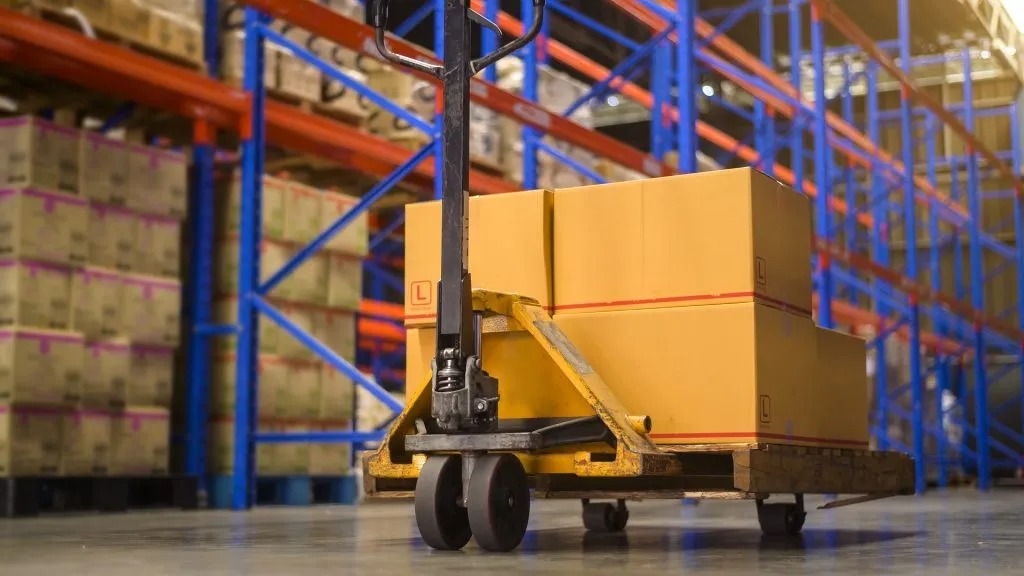
If you are asking whether a normal jarak palet can handle a 40×48 plastic pallet, the short answer is yes. In many warehouses and distribution settings, a standard pallet jack can move this pallet size successfully. However, success depends less on the footprint alone and more on the exact pallet design, the fork dimensions of the jack, and the load being carried. Unlike many wood pallets, plastic pallets can vary a lot in entry style, bottom structure, and clearance. That means two plastic pallets with the same 40×48 size may behave very differently when used with the same jack.
It is also worth noting that 40×48 and 48×40 often describe the same pallet footprint, just written in a different order. In North American material handling, 48×40 is one of the most common pallet sizes. But whether a standard pallet jack works smoothly comes down to how the forks enter the pallet, how much support the pallet offers from underneath, and whether the fork wheels can roll over or under the bottom deck without catching.
Why a Standard Pallet Jack Usually Works
Most standard manual pallet jacks are built around common warehouse pallet sizes. A typical manual jack has forks that are about 48 inches long, with a common outside fork width around 27 inches. That configuration usually matches many general-purpose pallets used in shipping and storage. Because of that, a normal pallet jack can often work well with a 40×48 plastic pallet when the pallet has proper openings and enough underside clearance.
In other words, the issue is usually not the 40×48 size itself. The real issue is whether the pallet was designed for pallet jack entry. Some plastic pallets are made specifically for conveyor systems, export use, hygiene-sensitive environments, or automated handling. Those pallets may have different bottom profiles or less entry clearance, which can make manual jack use less smooth than with a standard warehouse pallet.
1. Pallet Type and Entry Points
The first thing to check is the pallet type. Plastic pallets come in several different styles, and entry design matters a lot. A four-way entry plastic pallet is usually easier for a standard pallet jack because the forks can approach from multiple sides. A two-way entry design is more restrictive and may limit how you can pick it up, especially in tight spaces.
You should also look at the bottom structure. Some plastic pallets have open runners that allow fork wheels to roll in easily. Others use a perimeter base, a picture-frame bottom, or a partially closed underside. These designs can sometimes interfere with the fork tips or front wheels of a manual jack. If the pallet has very low clearance, thick bottom ribs, or reinforced edges, the forks may not enter cleanly.
Another important detail is whether the pallet is nestable, rackable, or stackable. Nestable plastic pallets are often lighter and good for shipping, but they may not always be the best match for standard pallet jacks, especially under heavier loads. Rackable or warehouse-grade pallets are usually more rigid and often better suited for repeated jack handling. So while two pallets may both be labeled 40×48 plastic pallets, their performance with a pallet jack can be very different based on entry points and bottom design.
2. Pallet Jack Dimensions
The second key factor is the size of the pallet jack itself. Although many people refer to a “normal” pallet jack, there is no single universal size. Standard manual pallet jacks commonly use 48-inch forks, but widths can vary. The most common fork width is around 27 inches, while narrow models around 20.5 or 21 inches are also widely used. Short fork and long fork versions are available too.
Fork length matters because it affects how well the load is supported. A 48-inch fork is a common match for a 48×40 pallet when the pallet is entered from the correct side. If the forks are too short, the pallet may not be supported properly. If the forks are too long or the entry side is wrong, the jack may be awkward to position or may extend beyond the pallet more than expected. Fork thickness and lowered height also matter, especially with plastic pallets that have tighter underside clearance than wood pallets.
This is why a normal pallet jack may work perfectly with one 40×48 plastic pallet and struggle with another. Even if the footprint is standard, small differences in fork profile and pallet clearance can change how easily the truck enters and exits the pallet.
Are All Pallet Jacks the Same Size?
No, all pallet jacks are not the same size. While many warehouse operators think of a standard 27×48 manual pallet jack as the default, there are actually multiple widths, fork lengths, lowered heights, wheel materials, and capacity ratings available in the market. Narrow pallet jacks are often used for smaller pallets or tight aisles. Short fork models are useful where turning space is limited. Long fork models are used for oversized loads or special applications.
There are also low-profile pallet jacks designed for pallets with reduced clearance, as well as powered models for higher productivity. If your plastic pallets have lower entry openings or a more complex bottom deck, choosing the right jack dimensions becomes even more important. In some cases, users assume the pallet is the problem when the real issue is that the jack is not the best fit for that pallet style.
What Is the Load Capacity of a 48×40 Pallet?
A 48×40 pallet does not have one universal load capacity. The real capacity depends on whether the pallet is plastic or wood, the material grade, the deck design, and whether you mean static load, dynamic load, or rack load. That distinction is very important. Static load is what the pallet can support when sitting still on the floor. Dynamic load is what it can safely carry while being moved by a forklift or pallet jack. Rack load is what it can hold when supported in a rack.
For plastic 48×40 pallets, dynamic load ratings often fall somewhere in the range of roughly 2,500 to 5,000 pounds, while static load ratings can be much higher. Rack load capacity is usually lower and depends heavily on reinforcement and pallet design. The key point is that you should never assume all 48×40 pallets have the same strength. Always check the manufacturer’s rating and compare it with the rated capacity of your pallet jack. The safe working limit is always the lower of the two.
It is also important to remember that load shape and weight distribution matter. Even if the pallet has a strong rating on paper, an uneven or top-heavy load can still make handling unsafe. Plastic pallets may flex differently from wood pallets, so balanced loading becomes even more important during transport.
Best Practices Before Using a Standard Pallet Jack on a Plastic Pallet
Before moving a 40×48 plastic pallet with a standard jack, check the pallet entry openings and bottom clearance. Make sure the forks can enter fully without rubbing, lifting awkwardly, or catching on the base. Confirm the jack width matches the pallet channels and that the fork length provides stable support. Then review the pallet’s dynamic load rating and compare it with the actual load weight.
You should also inspect the condition of both the pallet and the jack. Damaged fork tips, worn load wheels, cracked pallet runners, or deformed deck boards can all create unnecessary handling problems. If the pallet is used in cold storage, wet environments, or high-turnover distribution, minor damage can become a major safety issue faster than expected.
If you move plastic pallets frequently, it may also be worth considering a more advanced solution from liftron, especially if your operation needs easier transport, higher efficiency, or better ergonomics than a basic manual jack can provide.
Final Verdict
So, can a normal pallet jack work on a 40×48 plastic pallet? Yes, in many cases it can. But the answer depends on two major factors: the design of the plastic pallet and the dimensions of the pallet jack. If the pallet has good entry points, enough bottom clearance, and a warehouse-friendly base design, a standard jack will usually work. If the pallet has restricted openings, low clearance, or a more specialized structure, you may run into handling issues even though the footprint is technically standard.
liftron reminds you: a 40×48 plastic pallet can often be handled by a normal pallet jack, but you should always check pallet entry style, bottom design, fork length, fork width, and actual load rating before use. Not all pallet jacks are the same size, and not all 48×40 plastic pallets have the same capacity. Matching the right jack to the right pallet is the best way to improve safety, stability, and daily handling efficiency.
 English
  French
  Spanish
  Vietnamese
  Thai
Thai  Italian
  Arabic
  Malay
Malay  Portuguese
  German
  Russian
  Japanese
  Korean
  Lao
Lao  Indonesian
  Turkish
  Irish
Irish  Uzbek
Uzbek