
To fix a pallet jack that won’t lift, first bleed the hydraulic system by pumping the handle 15–20 times with the release lever held down to remove trapped air. If that fails, check/refill the hydraulic oil and adjust the lowering valve cable. The most common issues are air in the system, low oil, or worn-out O-rings.
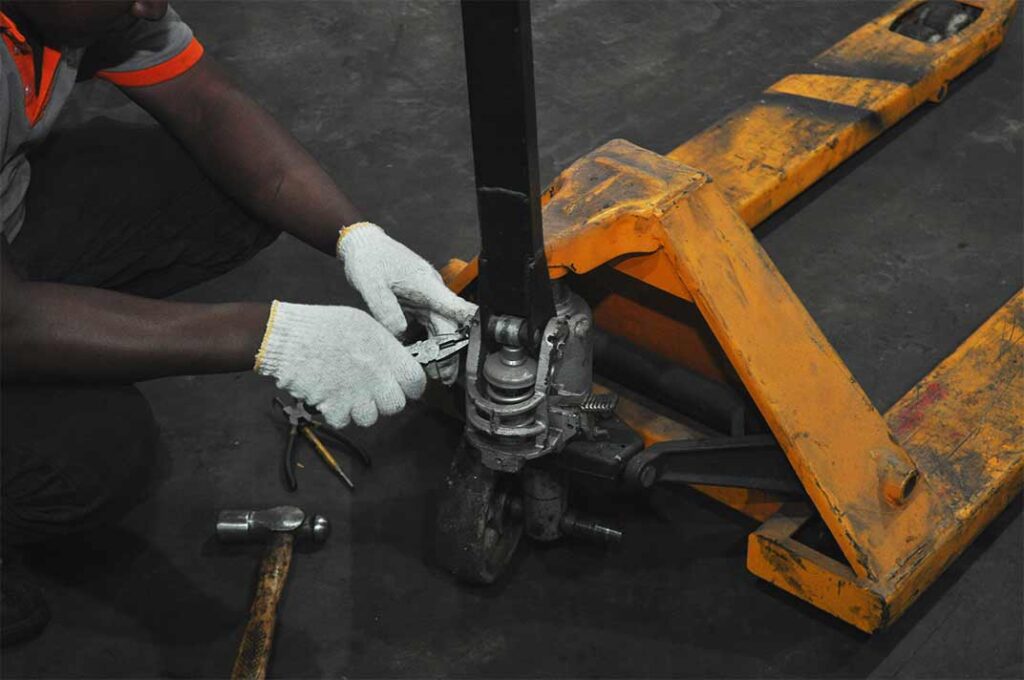
Why Your Pallet Jack Won’t Lift
A jarak palet that refuses to lift is one of the most common issues in warehouses and distribution centers. The problem is almost always hydraulic-related: air trapped in the system, insufficient hydraulic fluid, a worn pump seal, or a faulty release valve. These issues prevent the hydraulic cylinder from building the necessary pressure to raise the forks. Fortunately, most problems can be fixed quickly with basic tools and a few simple steps. Addressing the issue promptly prevents downtime and extends the life of your equipment.
Immediate Troubleshooting Steps
Bleed the Hydraulic Unit (Most Common Fix)
The single most effective first step is bleeding the hydraulic system to remove trapped air. Lower the forks completely, locate the release lever (usually on the handle), and hold it in the down position. Pump the handle vigorously 15–20 times. You should hear air escaping and see fluid movement. Release the lever and test the lift. If the forks now rise normally, the issue was air in the lines. Repeat this process if the problem returns after heavy use.
Check/Add Hydraulic Oil
Low hydraulic fluid is another frequent cause. Locate the filler plug on the hydraulic reservoir (usually near the pump or under the handle). Remove the plug and check the oil level. The reservoir should be filled to the top or marked line when the forks are lowered. Use only the manufacturer-recommended hydraulic oil (typically ISO 32 or 46). Add fluid slowly and avoid overfilling. After adding oil, bleed the system again to remove any introduced air.
Adjust the Release Valve
If the forks still won’t lift or rise only partway, the release valve cable may be out of adjustment or the valve itself may be sticking. Locate the adjustment nut or cable near the handle base. Tighten or loosen the nut in small increments while testing the lift function. On some models, the valve cartridge can be removed, cleaned, and reinstalled. If the valve is damaged or leaking, replacement is usually straightforward and inexpensive.
Additional Common Issues and Repairs
Worn O-rings and seals in the pump or cylinder are another leading cause of lifting failure. These rubber components degrade over time, especially in high-use environments. Replacing O-rings is a relatively simple repair that can be done with a basic seal kit. Inspect the hydraulic lines and fittings for leaks or damage. A leaking line will cause gradual loss of pressure and should be replaced immediately. If the pump itself is worn, it may need rebuilding or full replacement.
Safety Precautions When Repairing a Pallet Jack
Always lower the forks completely and engage the parking brake before starting any repair. Wear safety glasses and gloves when working with hydraulic fluid. Never attempt repairs while the jack is under load. Dispose of old hydraulic fluid according to local regulations. After any repair, test the jack thoroughly in a safe, open area before returning it to service.
What Is the Lifespan of a Pallet Jack?
Yang diselenggara dengan baik jarak palet typically lasts 5 to 10 years or 8,000 to 15,000 operating hours, depending on daily usage and environment. Manual models often outlast electric ones in light-duty applications, while heavy-use electric units benefit from regular maintenance and timely component replacement. Proper hydraulic fluid changes, seal inspections, and wheel/roller replacements can significantly extend service life. When repair costs begin to exceed the price of a new unit, replacement is usually the more economical choice.
When to Replace Instead of Repair
If bleeding, oil replacement, and valve adjustment do not resolve the lifting issue, or if you notice structural damage, bent forks, or repeated failures, it may be time to consider a new jarak palet. Modern electric models offer improved reliability, lower maintenance, and better ergonomics.
Kesimpulan
Fixing a pallet jack that won’t lift is usually straightforward once you understand the common causes. Start by bleeding the hydraulic system, then check and top off the hydraulic oil, and adjust or clean the release valve if necessary. Regular maintenance and prompt attention to lifting issues will keep your equipment working reliably for years. When repairs become frequent or costly, upgrading to a new, more efficient model is often the smartest long-term solution. Proper care and timely repairs ensure your pallet jack remains a safe and productive part of your material handling operation.
 English
  French
  Spanish
  Vietnamese
  Thai
Thai  Italian
  Arabic
  Malay
Malay  Portuguese
  German
  Russian
  Japanese
  Korean
  Lao
Lao  Indonesian
  Turkish
  Irish
Irish  Uzbek
Uzbek